It’s a great experience to see Real Madrid play at Estadio Barnabeu. They have wheelchair seating down on the level of the field, but we were fortunate enough to get VIP tickets (they were a gift, but cost about €300). Getting to the VIP lounge was a bit of a challenge as no one really knew HOW to get us there, but they figured it out – take the elevator around Gate 50 and go through a restaurant, and there you are.
If you’re in a car, there is a big parking lot exclusively with handicap parking – probably about 30 spaces.
Puerta del Sol was just a block or so from our hotel, and considered Kilometer 0 and from which five roads emanate like spokes on a wheel to other areas of Spain. We spent time in the Plaza Mayor, which is a major tourist area with lots of shops and street entertainers – great for people-watching! Mercado San Miguel is often advertised as a market to visit. It appeared to be accessible, but was SO crowded that we chose not to enter.
The Prado was amazing. We had not purchased tickets ahead of time, and when we arrived, the line stretched around the museum! Fortunately, they let us in without having to wait. The Prado was very accessible with elevators and ramps, so we were able to see everything we wanted.
If you’re interested in Flamenco, there are lots and lots of places to see it. We went to one at Torres Bermejas. We made reservations and indicated that we had someone in a wheelchair, but when we got there, it was completely inaccessible with multiple steps down to a basement. However, the employees there were very accommodating and carried Robert down and back up the steps so that we could all enjoy the show. Be sure and ask specific questions when you’re making reservations, as they are all too happy to say that they can accommodate without necessarily knowing what that means.
Hotels may or may not be accessible, so again, we recommend using BCN Accestour for your accommodations. Having them make reservations in hotels in both Madrid and Barcelona alleviated a lot anxiety! Note that hotels make an assumption that, if you’re disabled, you will require separate beds. If you are a couple and want one bed that’s larger than a twin, you will need to let the hotel know in advance or you will have two twins. This seems to be common practice.
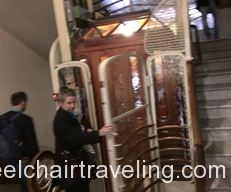
The one we stayed in (Hotel Regina) was very accessible with accommodations specifically for people in wheelchairs. The one where Laura Lea taught a class (Hotel Gran Velazquez) was NOT accessible – Robert couldn’t even get past the lobby.
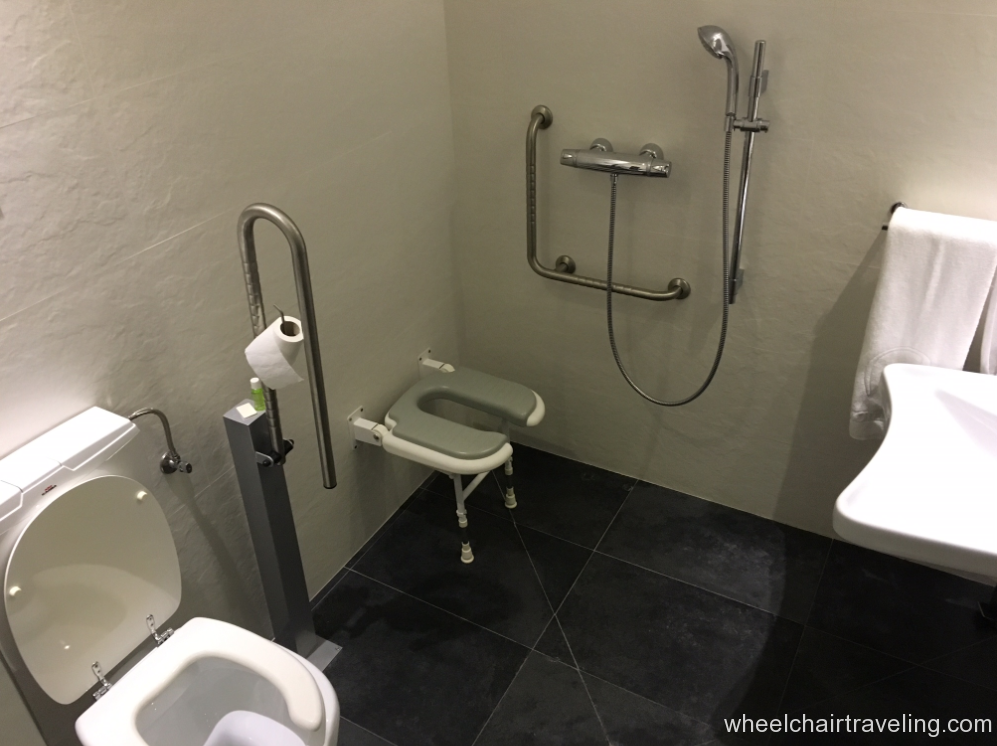
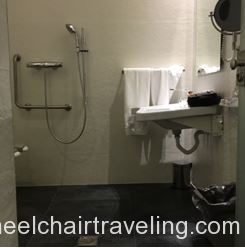
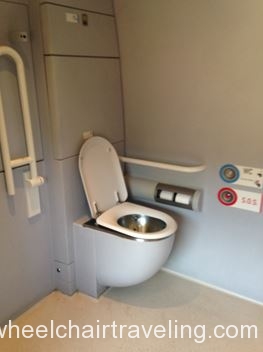
Hotel Regina in Madrid was super accessible – our room actually had TWO bathrooms! One was moderately accessible and the other one specifically for wheelchair users, although Robert said it was actually overly accessible – such as the toilet seat being situated too high. A friend had a regular room, and it was tiny. Ours felt small compared to US standards, but was palatial next to hers! One downside to this hotel is that the accessible rooms overlook an alley where there are a couple of bars and the garbage men come EVERY NIGHT at 3am. Sleeping with the windows open will not allow you a full night’s sleep.
Other than the nighttime noise (which you can avoid if you close the window), it’s great. It’s very centrally located next to Puerta del Sol and easy to walk to almost anywhere.
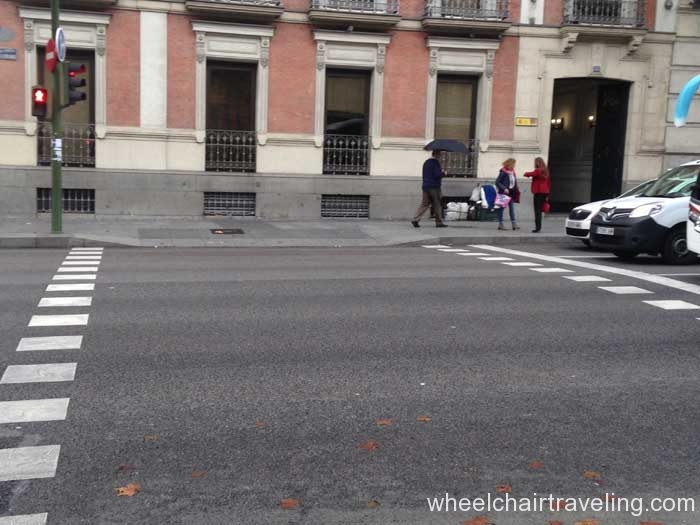
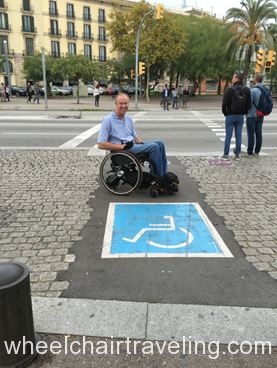
Barcelona is a pedestrian city, completely designed for people who are not in cars. The sidewalks and crosswalks are extremely wide (10-20 feet), with gentle curb cuts that make it very easy to get around in a wheelchair (some of them are steeper than others, but not too bad). Given the age of the city, some of the shops/restaurants are not accessible, but most seem to be.
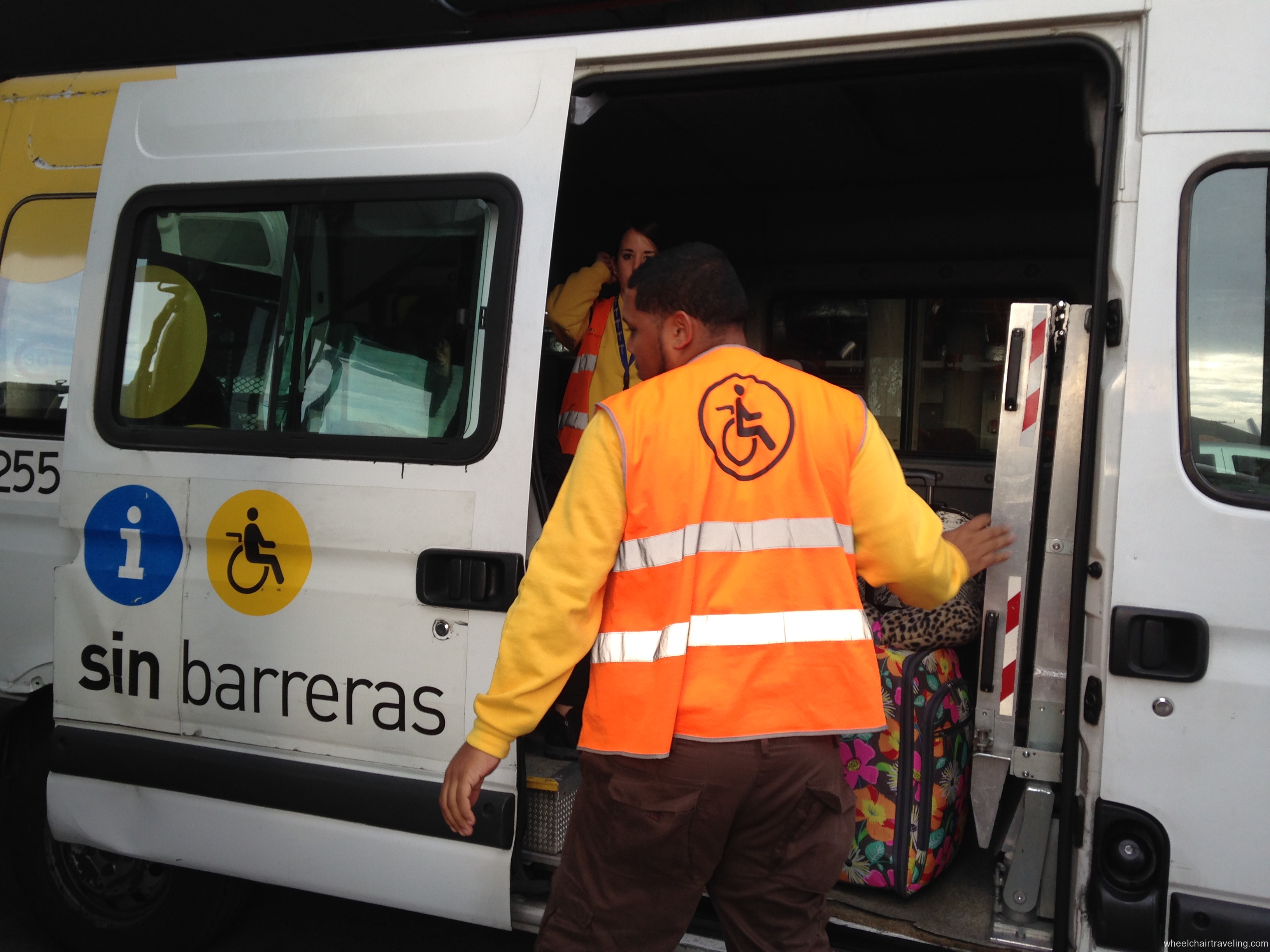
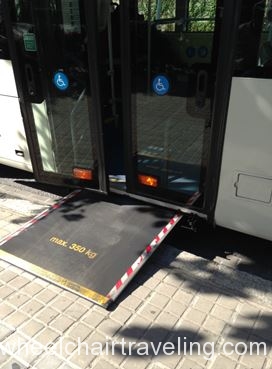
It is very easy to get around Barcelona on the public buses. They all have ramps and spaces for wheelchairs. They come every few minutes, so it’s the recommended way to get around – would be especially better than taxis for power chairs. At times the bus may stop too close or too far from the curb, but they will move if necessary.
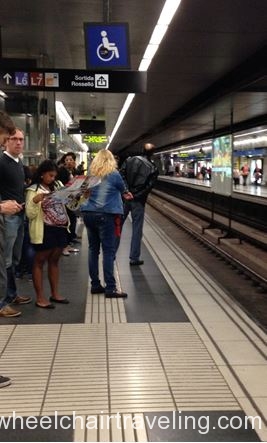
The Metro is also a great way to travel. According to their website, it is 93% accessible, and we usually had no problems getting around the stations or on/off of the trains. However, we did wind up in one of the 7% inaccessible stations (Espanya) and got stuck. We had to find people to carry Robert up a LOT of steps to the streets. If you go to the metro website, you can get a list of which stations are accessible. We highly recommend that you print this list and carry it with you everywhere or at least mark the inaccessible stations on your metro map – it could have saved us a lot of trouble. Once in the stations, it is not always a smooth transition from the platform to the train and vice-versa. Sometimes the train was up to 6” higher than the platform. The metro can be very crowded so you may just need to barge your way in. You will often not even be able to get to the designated wheelchair spot, so be prepared.
Estacio Sants is the train station, if you take the high-speed train into or out of Barcelona. It’s very plainly marked and easy to get around, but again, when you arrive there to take the train out of the city, be sure to ask for assistance.
When we were leaving Barcelona to return to Madrid, we took the Metro to Estacio Sants to catch the train. The Metro was very confusing in terms of accessible access to Estacio Sants, but we eventually figured it out. It’s too complicated to explain here, but if you take the metro to the train station, be sure to allow extra time figure out the elevators.
We took one of the hop-on, hop-off buses one day to see the city. It was a good way to spend an unplanned day, just getting off wherever the mood hit us and seeing the sights, then hopping back on. The good thing is that all of these buses are wheelchair accessible. The bad news is that the company that we used, Barcelona City Tours, had one wheelchair space in each bus with no seat next to it – meaning that we couldn’t sit together.
Finally, you can always take taxis. The drivers in Barcelona tend to not be very friendly, and are very particular about their cars. They will want to take your chair and put it in the car in a way that will not damage it (the car), so you have to be very assertive to let you or your companion handle it.
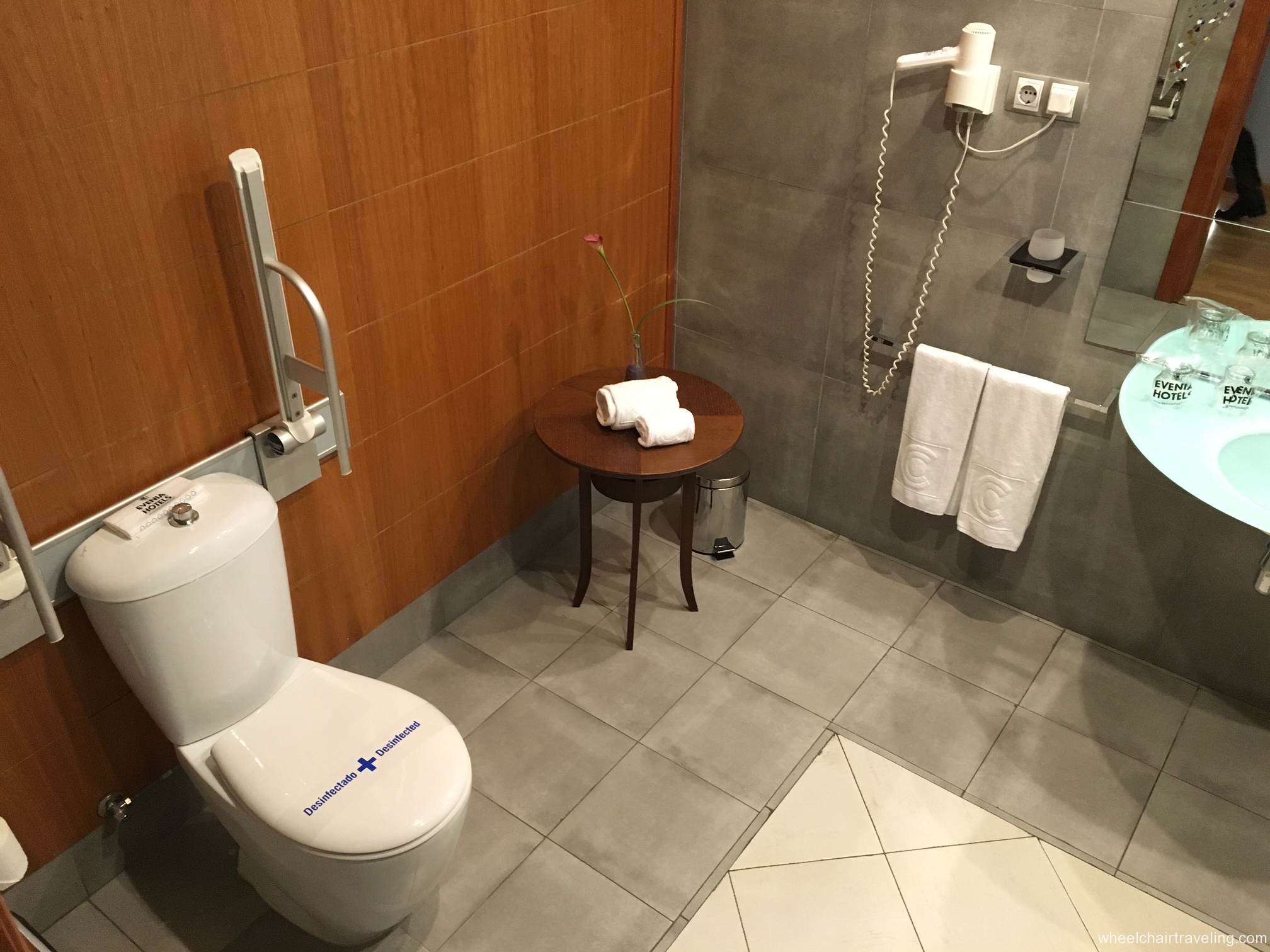
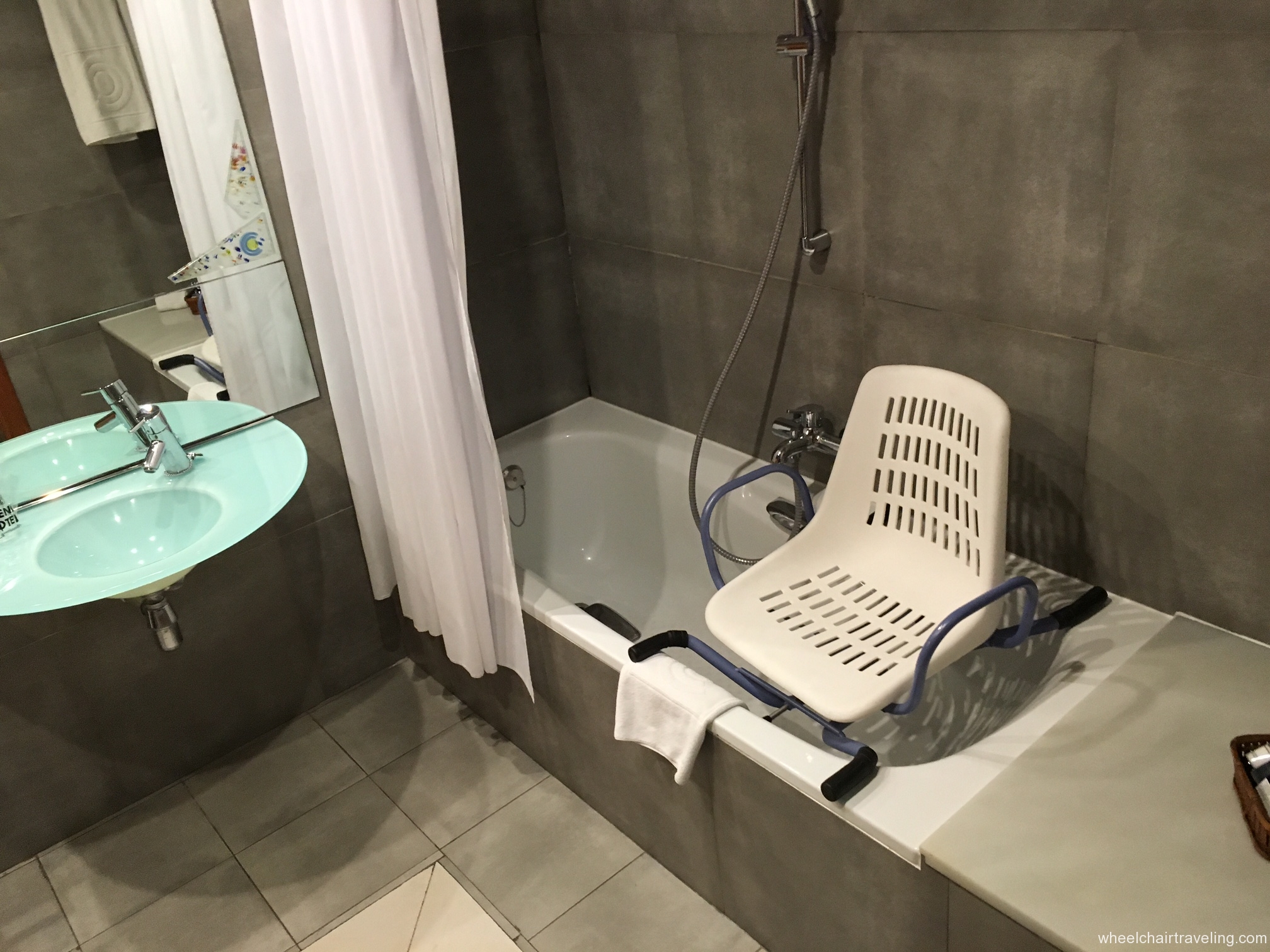
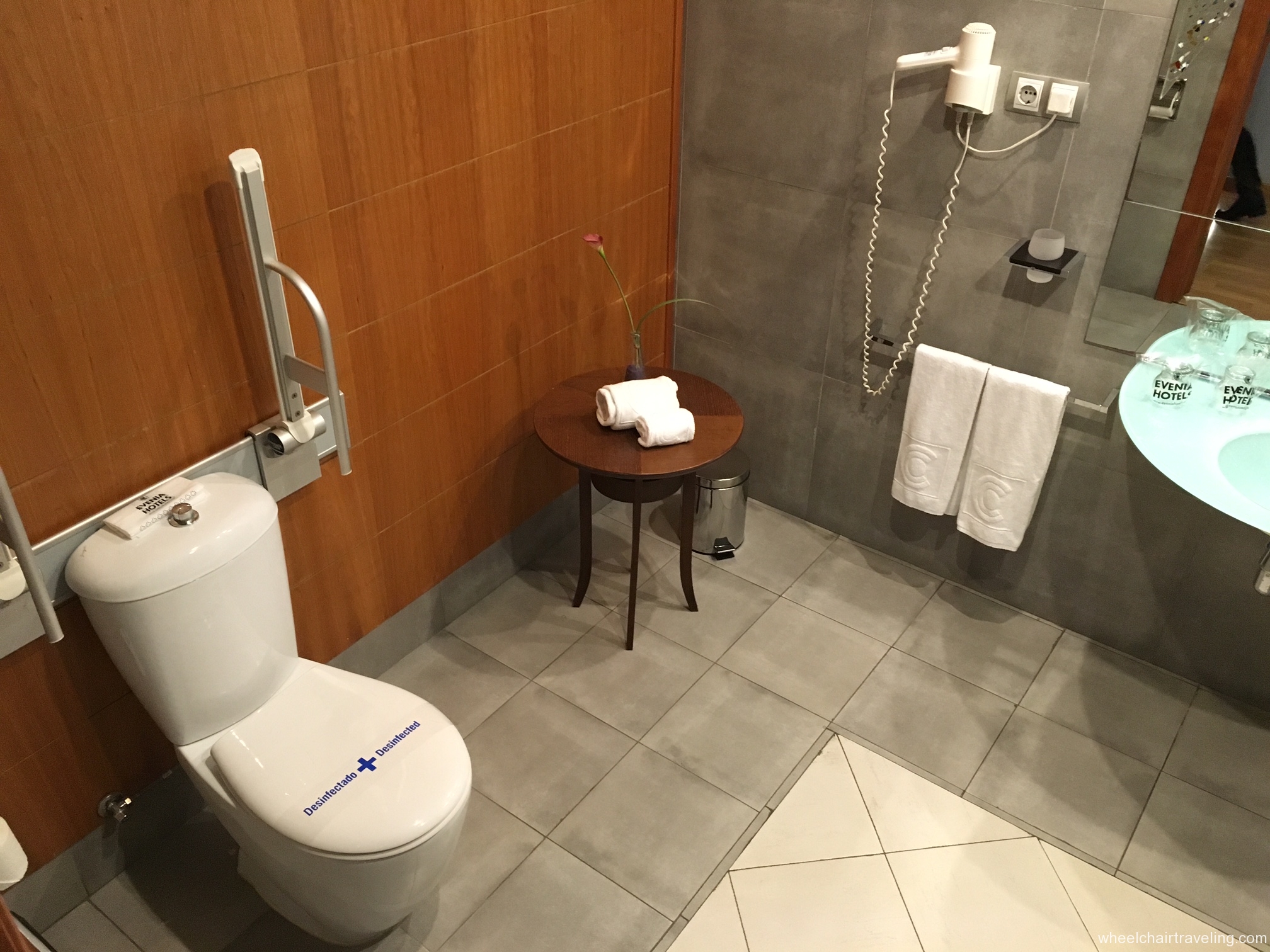
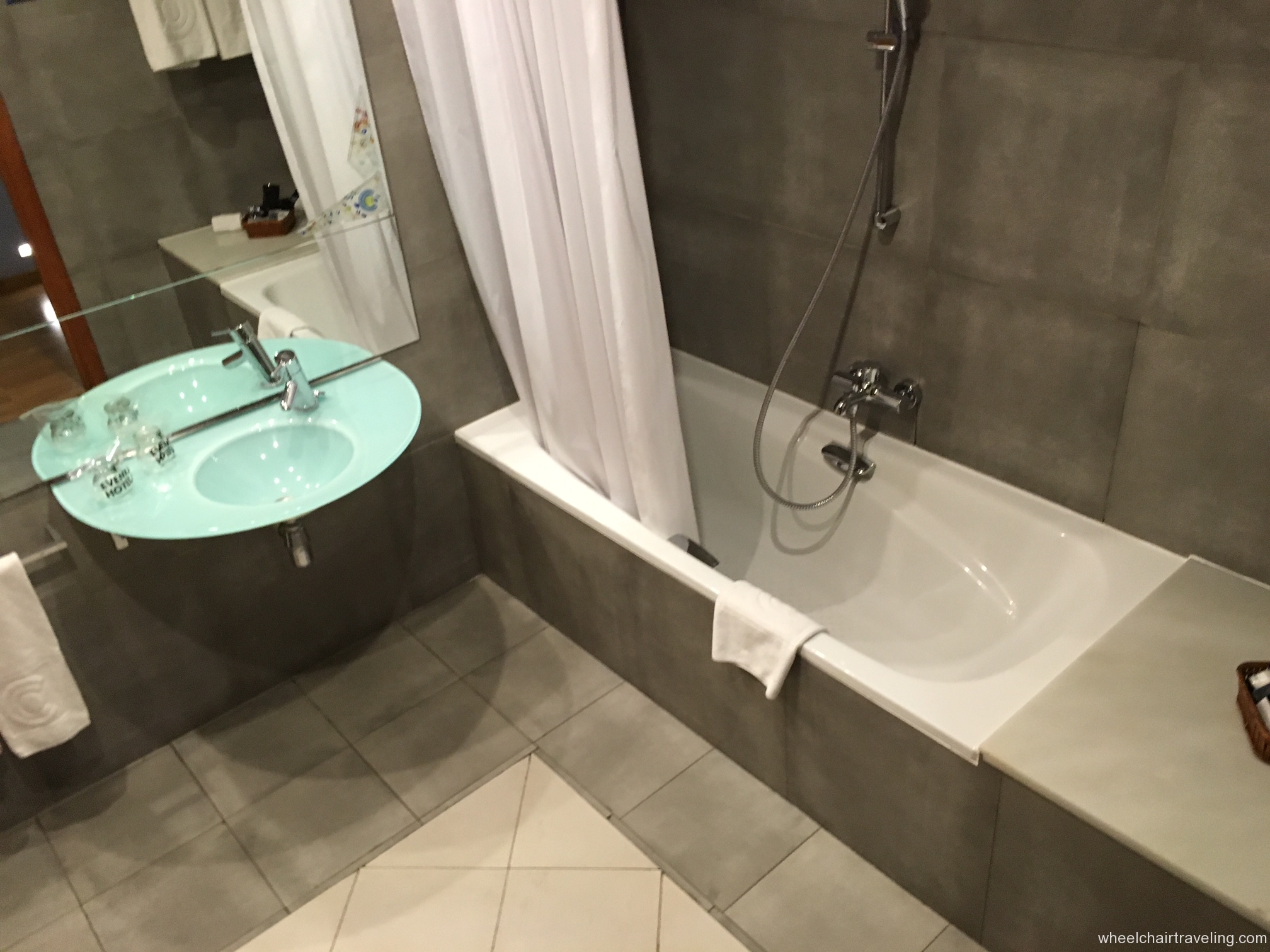
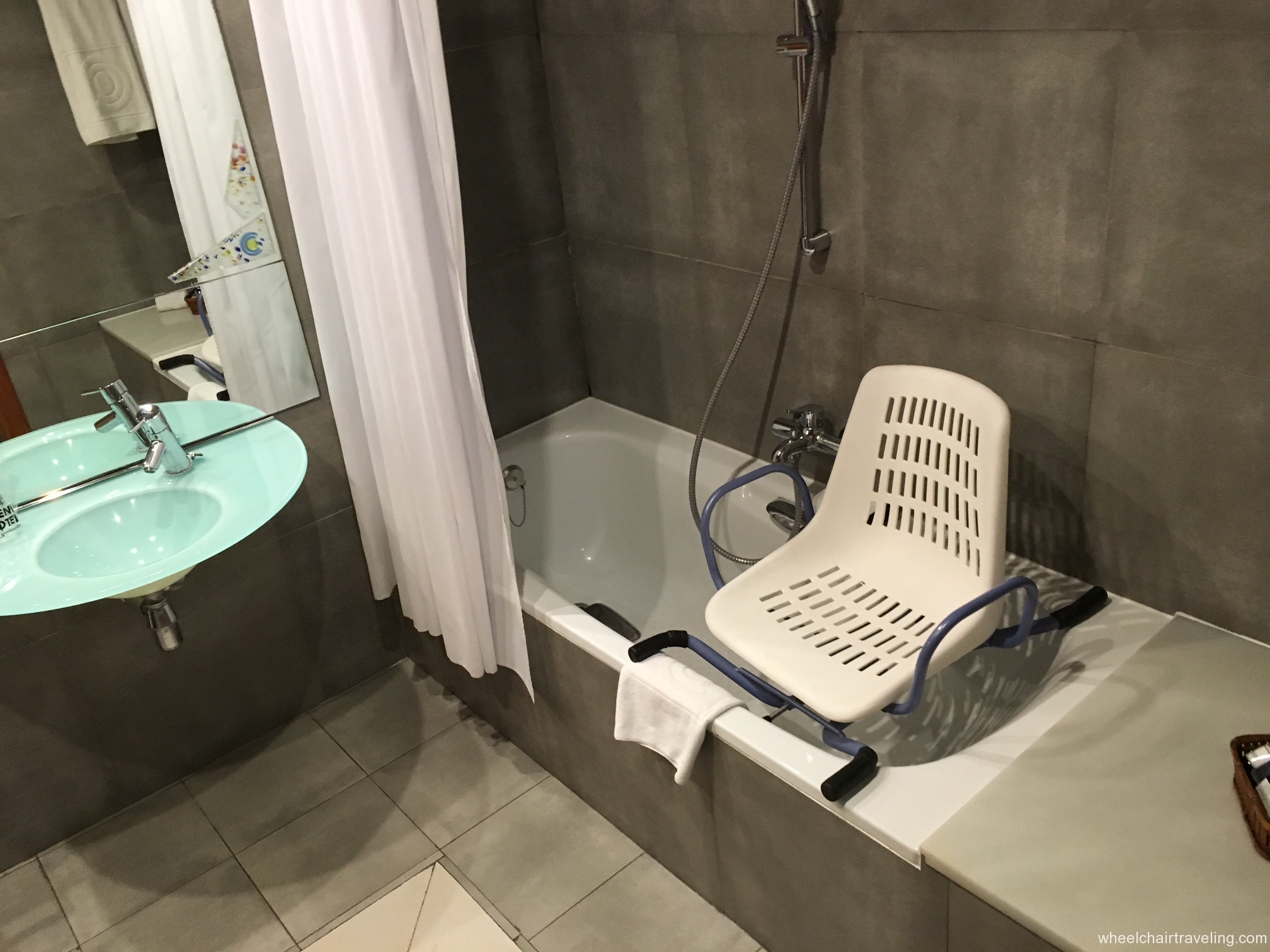
We stayed in the Evenia Rosselló hotel. Our room was very spacious, one of four in the hotel that also had a balcony. The bathroom was fully accessible, and they brought in a chair that sat on the bathtub for showering. The bathtub was big enough that the chair could just stay there all the time and Laura Lea had room to take her showers as well; we didn’t have to keep moving it in and out. It is a great location and short walking distance from two of Gaudi’s most famous houses (La Pedrera and Casa Batlló). One important note: it is categorized as a four-star hotel, but it is at best a three-star. We were very happy with it, but it’s fairly basic.
This was an amazing trip with very few hiccups. We would highly recommend it!
For many wheelchair users visiting the United States, renting a wheelchair-accessible van can make the…
Travel has long been recognized as a powerful way to experience the world, learn about…
Disclosure: This article highlights products that may be helpful for wheelchair travelers. WheelchairTraveling.com received a…
In late 2024, the U.S. Department of Transportation (DOT) finalized a rule focused on wheelchair…
Ancient history belongs to everyone. And while many world-famous ruins were built long before accessibility…
Japan offers a wide range of accessible transport services for wheelchair users, with several companies…
This website uses cookies.
View Comments
Night train from lisbon to Barcelona accessibility? Has anyone tried this?
Hello. Thanks for the article. I'm a big fan of Gaudí and I would like to see all of his works in Barcelona - https://www.reasontosee.com/blog/best-gaudi-buildings-to-visit-in-barcelona
Are they accessible?
Thanks