Ecuador
Ecuador is certainly beautiful but the presence of oil companies and globalization is spreading like a virus. Indigenous natives, like the Quichua (also spelled Kichwa), continue to carry out the traditions of their ancestors, but since the early part of the twenty-first century, modern conveniences and pleasures have entered their homes and minds. Upon visiting one family of fifty-plus people, there was not only an authentic hut but the family’s primary home with a satellite dish attached to the roof. Elders are eager to keep traditions alive, including shamanic practices, while some of the younger generations have been memorized to a certain degree by the modern world like a child’s first piece of candy. But as we know, candy is not good for you and should only be enjoyed (if at all) in moderation. Hopefully, enough will ensure that the cultural practices of the Quichua continues to live on. Time will tell.
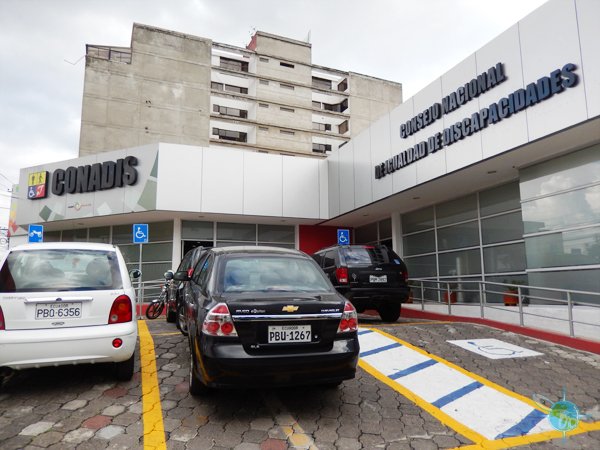
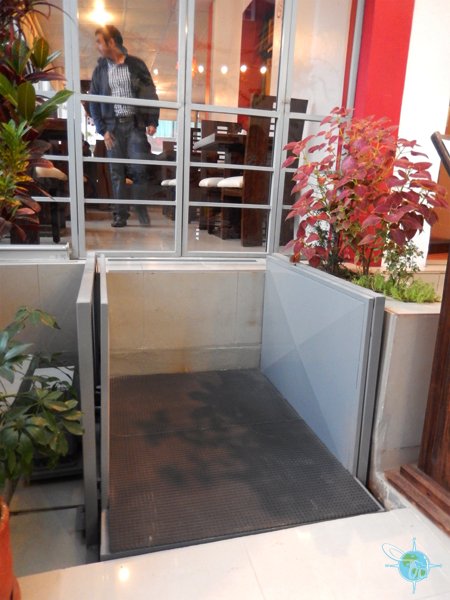
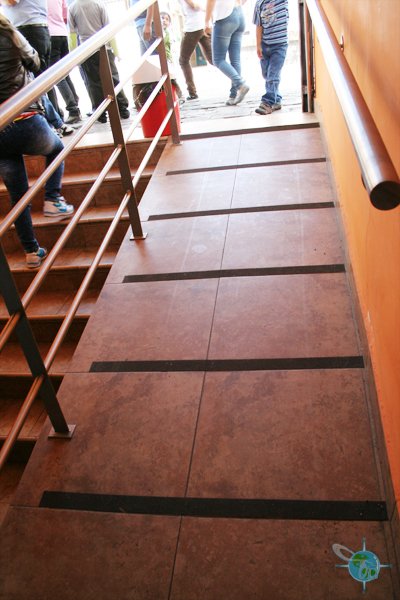
Ecuador is a small but heavily bio-diverse country located on the west side of South America. Traveling around the country proposes challenges for those with limited mobility as accessibility only began to be implemented during the 2007-2013 term of Vice President Lenín Moreno, a paraplegic. Such improvements included some accessible ramps to sidewalks and major attractions, accessible restrooms at selected gas stations, and CONADIS, a government program that provides aid and resources to Ecuadorians with visual, cognitive, hearing, or physical limitations. The main goal of CONADIS is to rehabilitate Ecuadorians and give them the tools to be active and contributing members of society.
CONADIS is an enormous step toward creating equal access but many barriers still exist. For one, there is no accessible transportation. The buses do not have lifts and taxi cabs, although they will serve everyone, and do not have any special adaptions. Taxis are, of course, a very expensive way to travel but in some cases, it may be your only option if you cannot climb the steep stairs to a bus or have an able companion to carry you. Renting a car is also an option but navigating can be difficult due to frequent poor road conditions and lack of directional signs. Plus, there are no adapted vehicles for rent.
If you cannot stand or walk a little bit and require the use of a wheelchair or some other mobility equipment the best option is to tour Ecuador with an organized tour. The one in Ecuador that specializes in adapted tours is Latin America for All, and this company has come up with a very creative way to experience Ecuador with limited mobility. Even with the tour, it is a good idea to have a companion traveling with you that can assist you in transferring (if needed) and up steps.
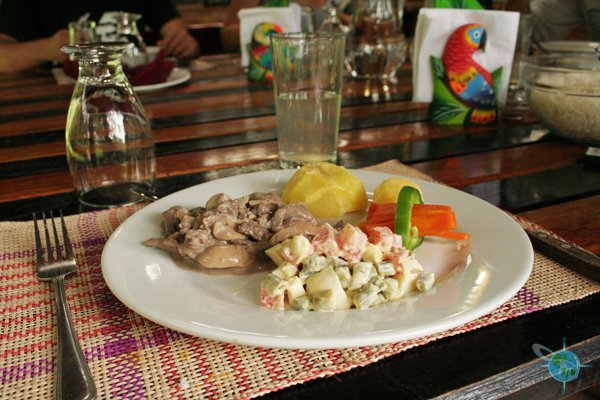
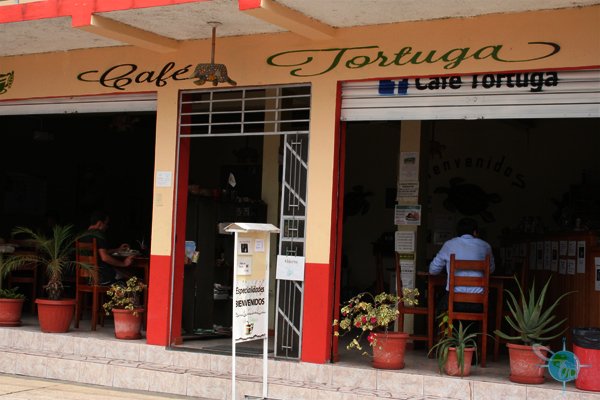
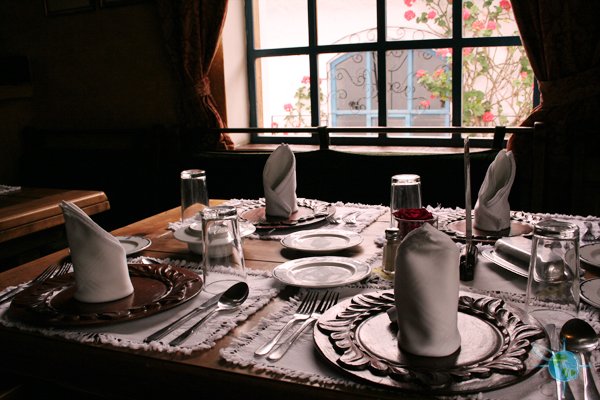
Despite Ecuador’s progress in accessibility, accessibility to stores and eateries is almost non-existent, so assistance into them is almost always necessary, especially outside of Quito. This equates to a lot of lifting so if using a wheelchair then a manual is a must—leave the scooter or power chair at home. The meals coordinated by the tour are at locations that are generally more on the accessible side but access still varies and this includes restrooms.
Challenges to traveling to Ecuador with a wheelchair or other limited mobility certainly exist but more and more companies are responding to the demand, kindly organized and exposed by Ecuador for All. Accessibility continues to grow but slowly. More and more locals with limited mobility are creating change through politics. Besides the ex-vice president, one such person is Alfonso Morales who is responsible for accessibility in the town of Baños de Agua Santa. He also owns a wheelchair friendly hostel with his mother, which has accessible guestrooms and an unforgettable view.
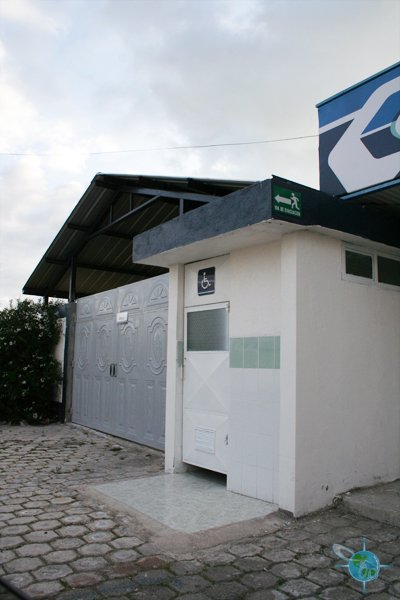
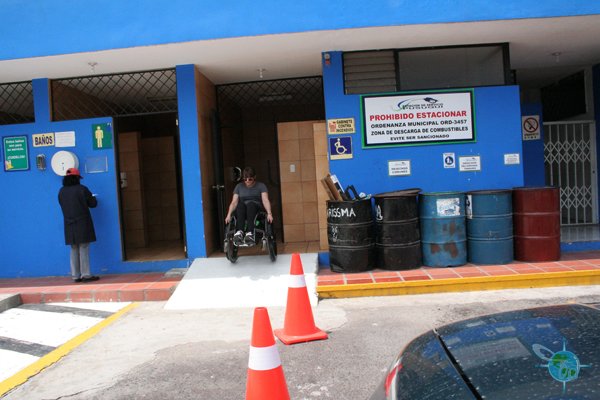
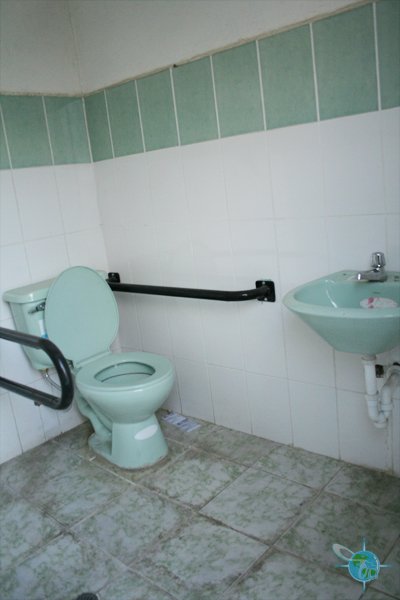
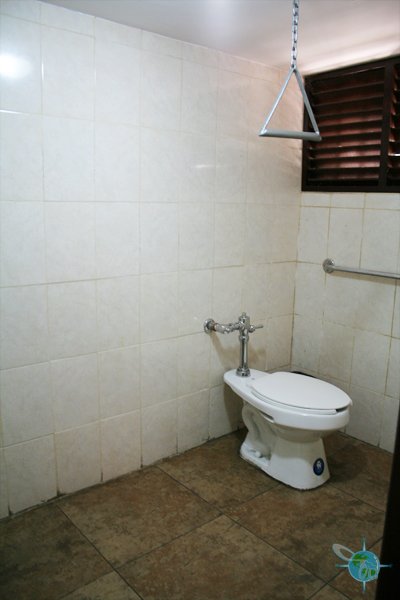
Accessible restrooms are very few and far between. The most accessible ones are found at certain gas stations as previously stated. The gasoline business is controlled by the government and though there are a number of brands, PetroEcuador was one of the most reliable. However, there was never any toilet paper and occasionally the seat would be stolen. Sometimes there would be one for men and one for women other times unisex. Regardless, such restrooms included a ramp to the door, grab bars, and a roll-up sink. The toilets never seemed to have any height modifications. It was also rare to find a hotel or restaurant while out and about with an accessible restroom or at least one large enough to fit a manual wheelchair, so forget about grab-bars or any other modifications.
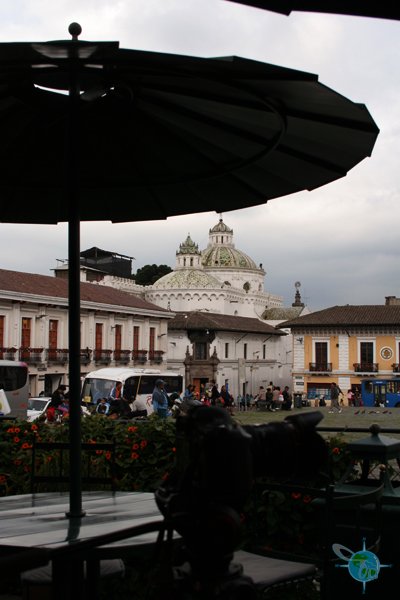
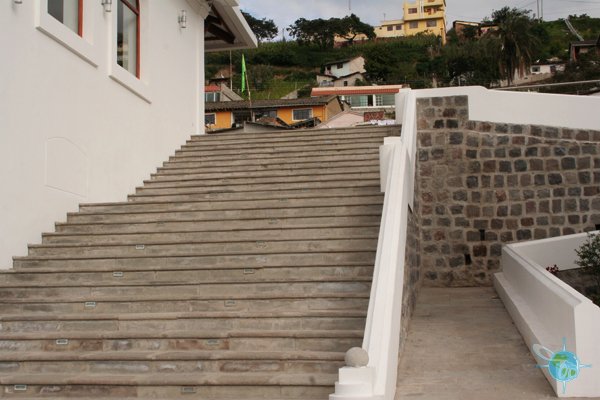
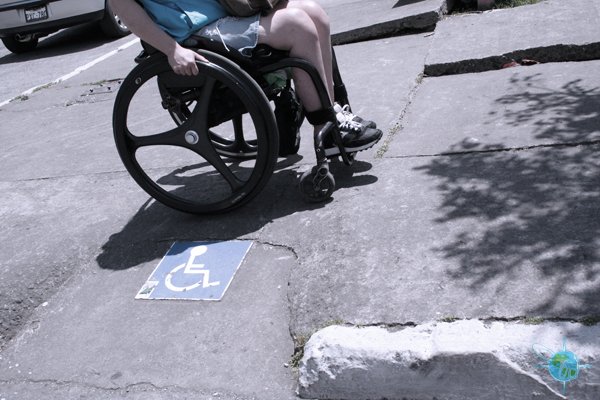
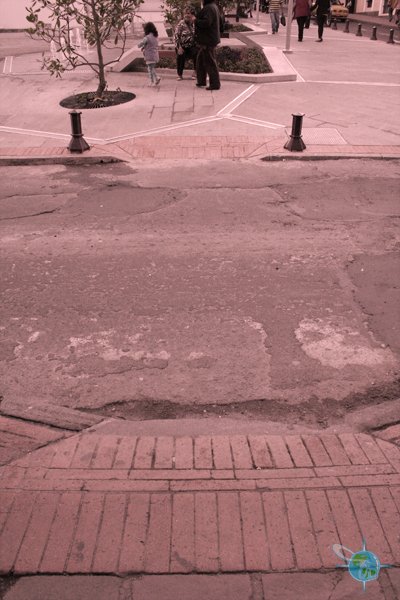
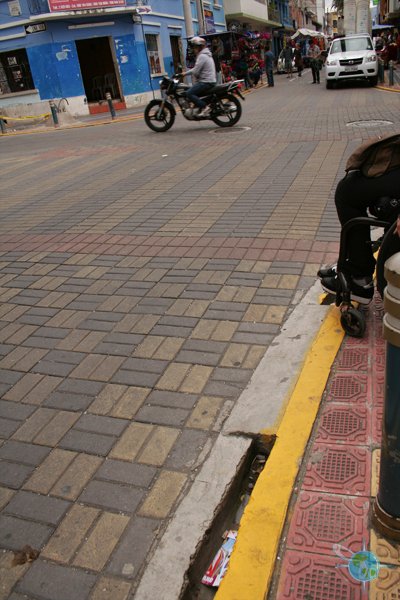
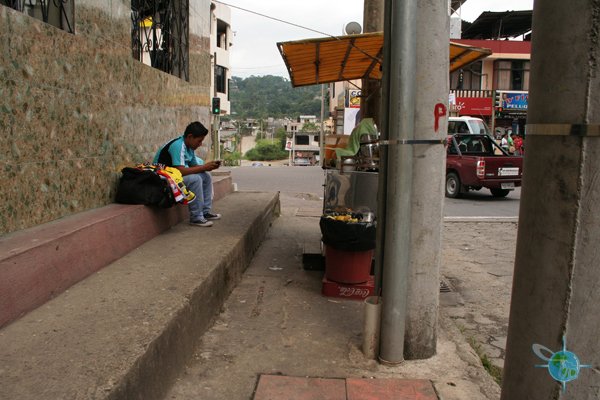
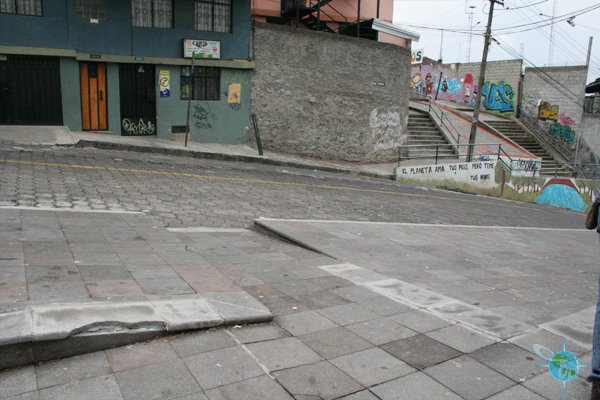
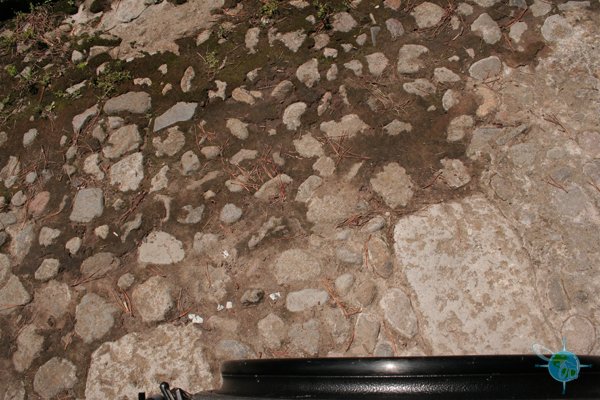
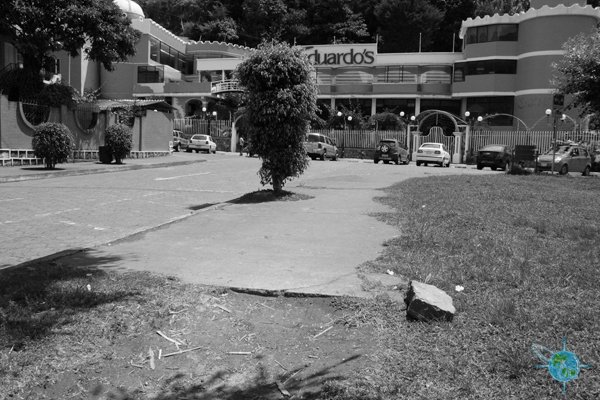
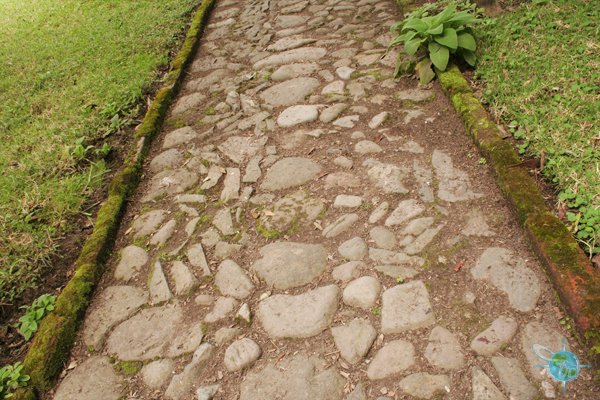
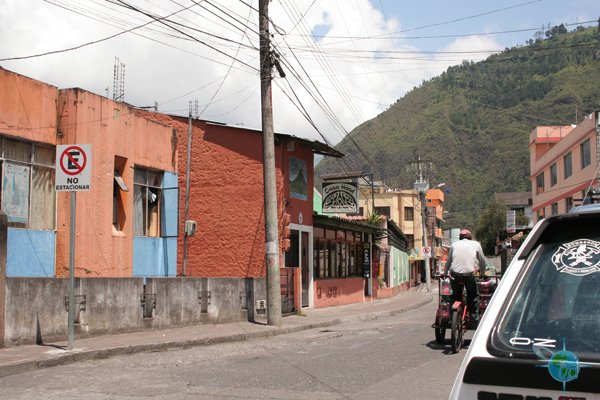
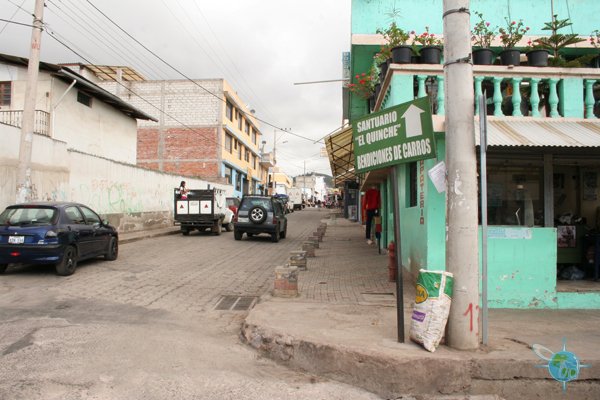
Finding accessible restrooms is one challenge when traveling around Ecuador, and the infrastructure itself may also be problematic for some. For instance, sidewalk ramps, or curb cutouts, are likely non-existent except for a few towns and the city of Quito, and yet such modifications are only in centrally specific areas. South America for All has the county mapped out and knows exactly what towns are better than others based upon pedestrian navigation with limited mobility. Some of these towns include parts of Baños de Agua Santa and Otavalo. Cobblestones are common everywhere and caution is recommended while navigating. Occasionally, sidewalks would become too narrow or not passable. If safe, streets provided a much smoother alternative, but again, use extreme caution. Other times the street is cobblestone. Riding in a vehicle over many such bumpy cobblestone streets and other various unpaved surfaces could be too physically rattling for some travelers.
About Insane Wayne Insane Wayne is a comedian and speaker based in California, known for…
Accessible cruising can open the door to a memorable and relaxing vacation, but the details…
For many wheelchair users visiting the United States, renting a wheelchair-accessible van can make the…
Travel has long been recognized as a powerful way to experience the world, learn about…
Disclosure: This article highlights products that may be helpful for wheelchair travelers. WheelchairTraveling.com received a…
In late 2024, the U.S. Department of Transportation (DOT) finalized a rule focused on wheelchair…
This website uses cookies.



View Comments
I love your site and I need to ask you about disable cars on the where about I can find information on discount for over 65s disable person, I am finding it hard to get this Information. Can you help plesae.
Regards
Keith
It looks like Ecuador and 3rd world countries in general and many European countries are NOT wheelchair friendly...:-(
Reality check..guess I'll buy an RV and tour USA for a while...