Mexico City is a bustling and cosmopolitan city. Accessibility in the streets was generally manageable (though sometimes the condition of sidewalks and curb cuts are questionable), especially in more modern or touristy areas such as El Polanco, La Condesa, or Roma Norte/Sur.
The simplest way for me to get around was to Uber. There is an extensive metro system, however, accessibility is not always consistent. For example, there may be an elevator into the station from the street but not to the platform. The city is making efforts to incorporate accessibility though, the accessible metro stations have elevators exclusively for the disabled that can only be unlocked by the police in the station or by a special access card that you can apply for!
The Metrobus, which is like a light rail that runs above ground in the street is way more accessible and even has designated cars for people with disabilities and women. Not every stop is accessible so best to ask the police officer at the station that you board (every station has an officer). Here is a website listing station access.
The city of Oaxaca is the center of Oaxaca state, one of the southernmost states of Mexico. In general, it is less of a tourist destination than the beach resort cities like Cancún so discovering the local rhythm of life and escaping hordes of people speaking English is easier; however, accessibility is less modern so expect some obstacles.
The easiest way to reach Oaxaca from larger hubs like Mexico City or Cancún is to fly. Aeromexico, Interjet, and Volaris are some domestic airlines that have relatively inexpensive and regular flights to Oaxaca. I requested an aisle chair (silla de pasillo) at the airport when I checked in since there wasn’t an option to request it online.
Bus travel is also possible and would be much cheaper but could take several hours and be less accessible. There are different tiers of buses: Second Class, First Class, and Deluxe. I took the Deluxe overnight bus from Oaxaca to a city called Puebla. At the Oaxaca station they provided an aisle chair on the bus, and there was a restroom onboard. However, there was no aisle chair at the Puebla destination so I had to be carried off the bus. Just be aware that accessibility is not consistent!
While in Oaxaca the best mode of transportation besides walking/rolling is a taxi (Uber hasn’t reached Oaxaca yet) as the only public transportation are old buses. A taxi ride across town was an average cost. However, Uber does exist in larger cities like Mexico City and Puebla.
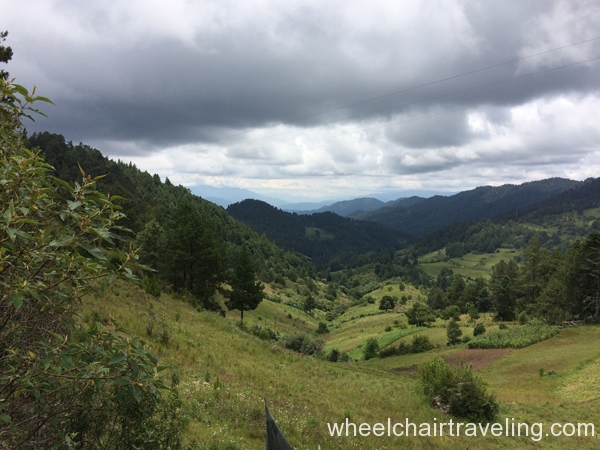
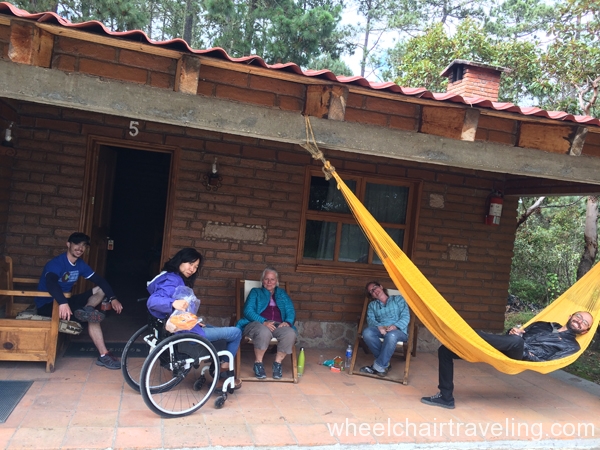
We rented a car to do a weekend trip to the mountains. There are several car rental locations in the city center, all of which are about the same. There is a daily rate for a car rentals and insurance while in Mexico. Renting a car was definitely easier than finding the small buses (colectivos) to get out of town. Also, no hand-controls are provided and many cars are manual!
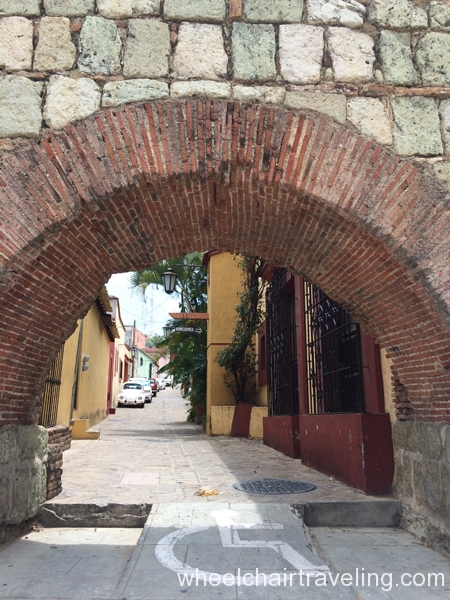
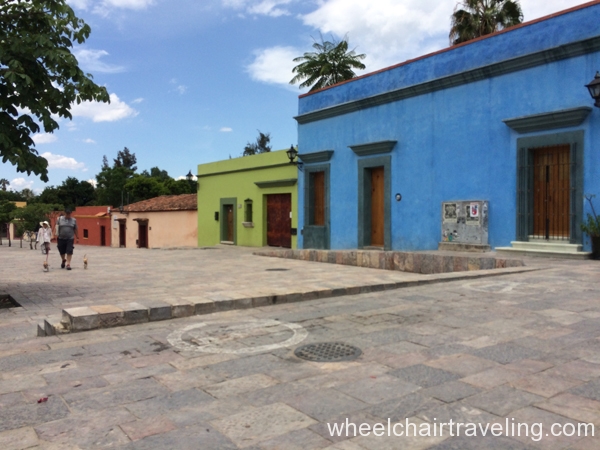
Once in Oaxaca I highly recommend staying in the centro, where most streets have curb cuts and where most of the tourist attractions are. The center of the city possesses a colonial charm with its brightly painted buildings as well as examples of indigenous diversity in the colorful textiles and handicrafts sold on the streets and in artisan workshops. However, the vast majority of buildings are older and lack elevators or lifts, even in museums and tourist attractions. Most businesses and residences have at least one step into the entrance, so it is helpful to have a travel companion. If you ask though, sometimes shopkeepers have wooden ramps (una rampa) that they bring out for wheelchair users. The locals, and Mexican people in general, were really friendly and always eager to help out so asking a stranger for some assistance is always an option if you feel comfortable and can manage a little Spanish.
I stayed in an Airbnb, which I would not recommend because it was difficult to find anything remotely accessible. There are some beautiful hotels and hostels throughout the city, many of which I noticed have a step at the entrance but if you call ahead they will likely make accommodations. Bathrooms were often a challenge as the majority of restrooms did not have accessible stalls. Even those that were marked accessible barely fit my chair, so using the restroom in hotels is your best bet. The one hotel in a modern building that I saw near the city center was One Hotel.
About Insane Wayne Insane Wayne is a comedian and speaker based in California, known for…
Accessible cruising can open the door to a memorable and relaxing vacation, but the details…
For many wheelchair users visiting the United States, renting a wheelchair-accessible van can make the…
Travel has long been recognized as a powerful way to experience the world, learn about…
Disclosure: This article highlights products that may be helpful for wheelchair travelers. WheelchairTraveling.com received a…
In late 2024, the U.S. Department of Transportation (DOT) finalized a rule focused on wheelchair…
This website uses cookies.