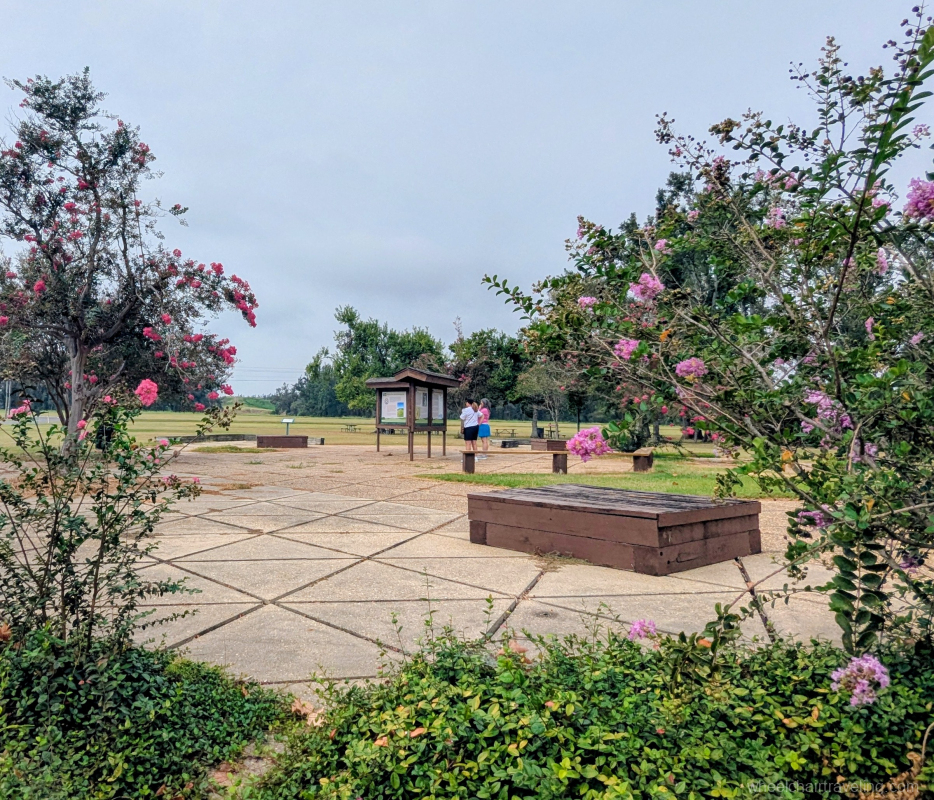
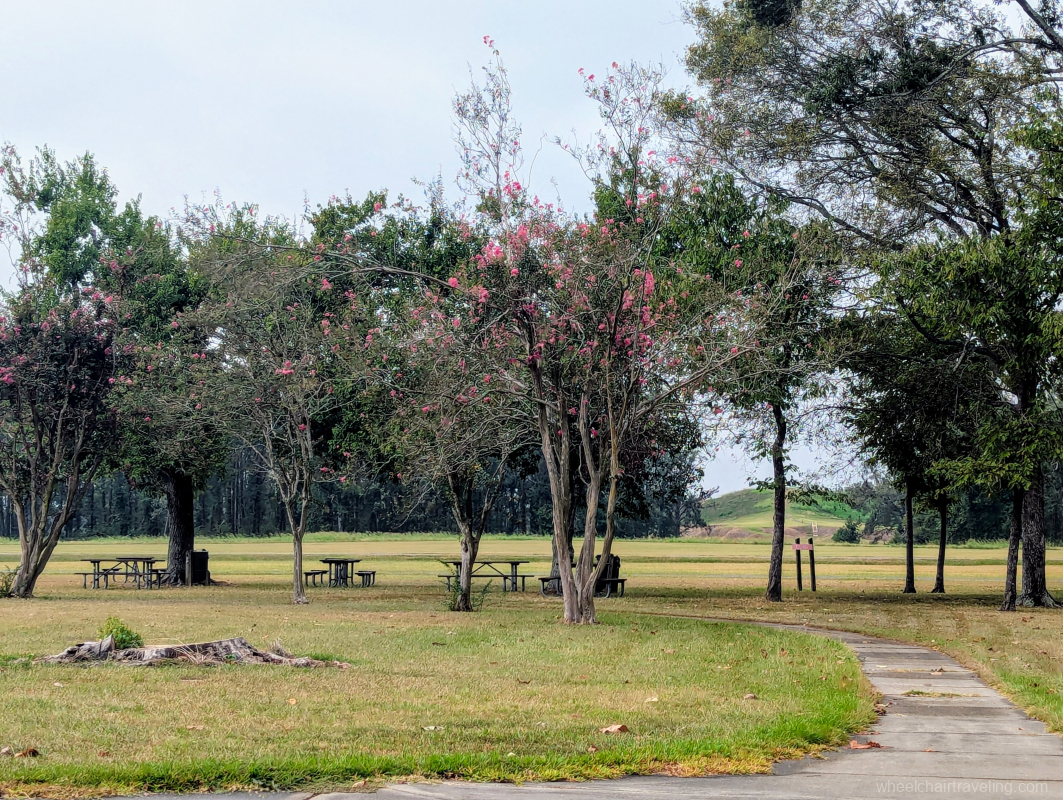
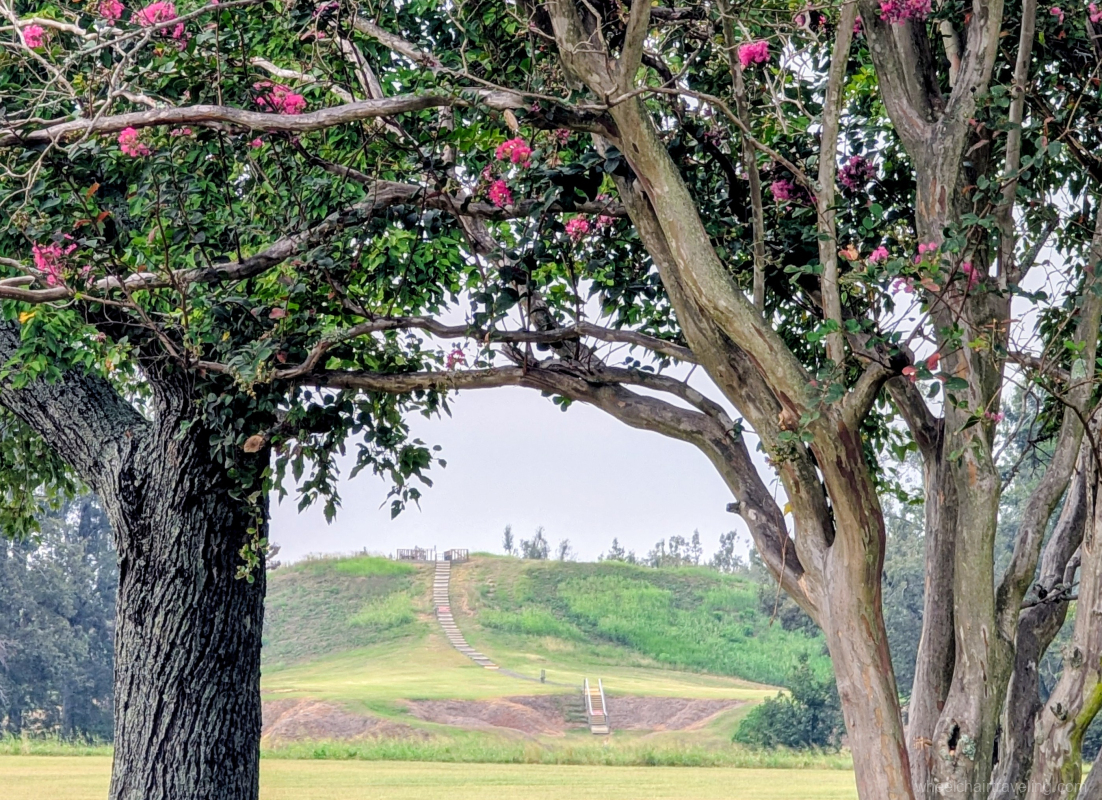
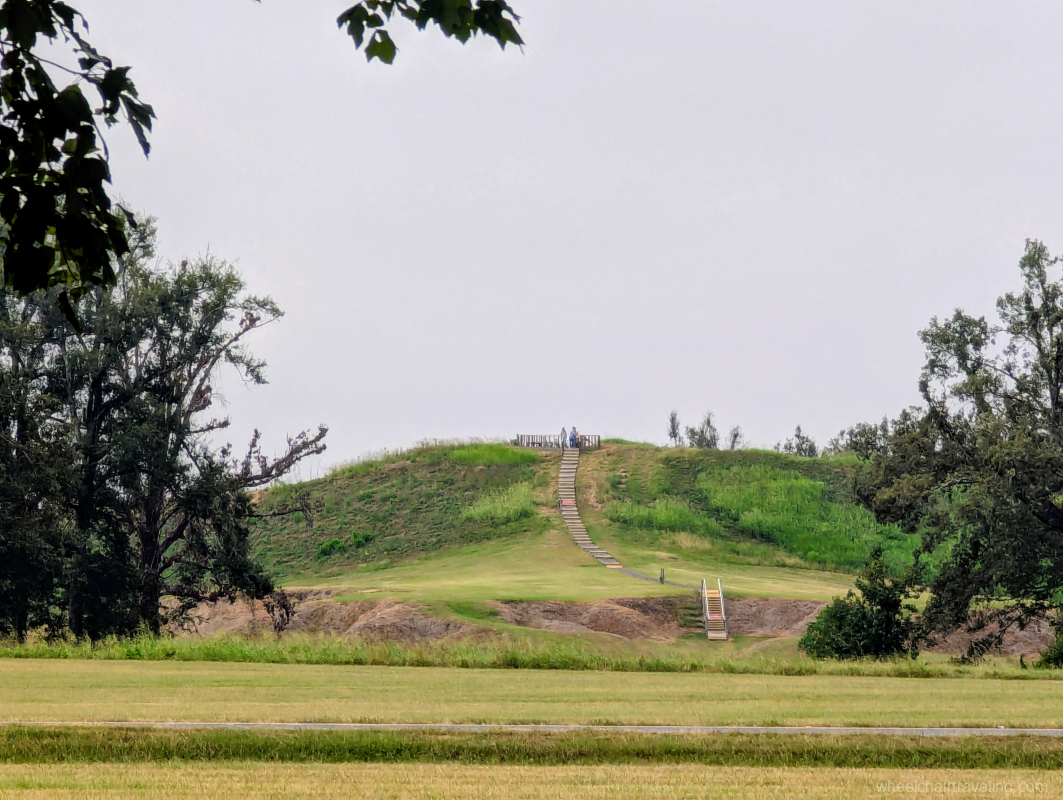
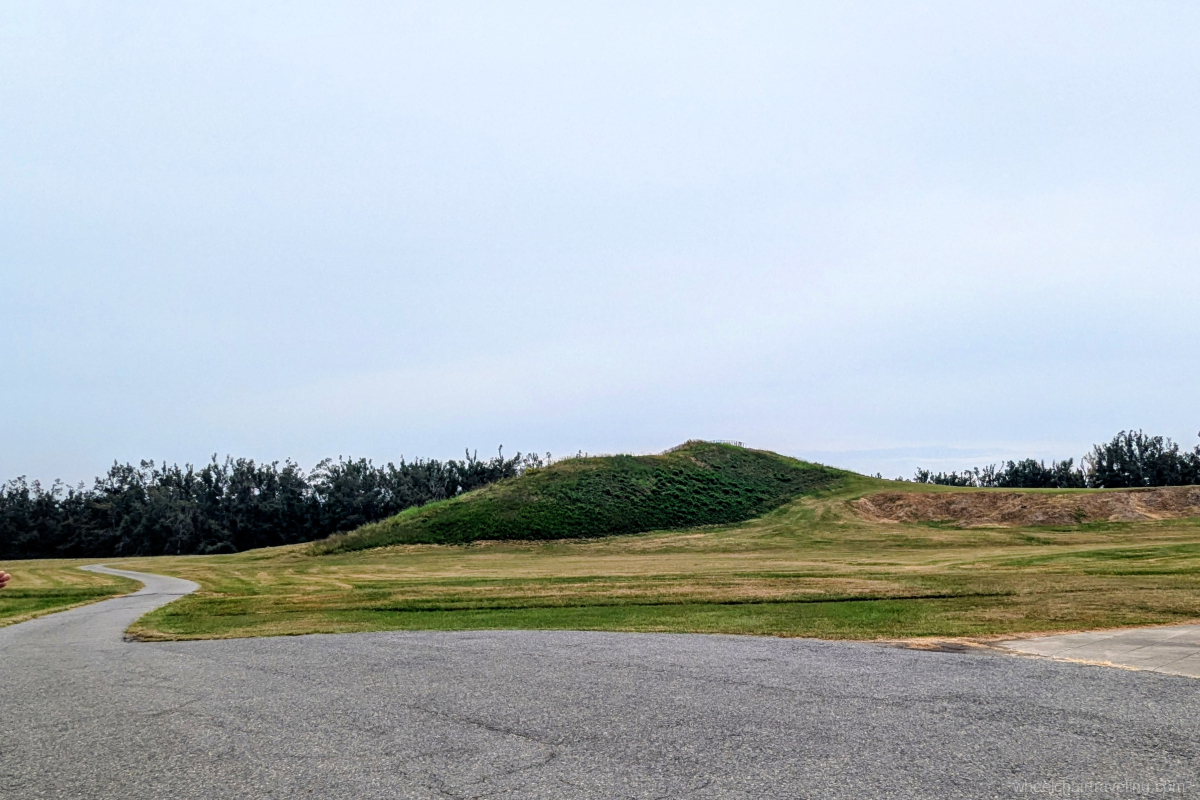
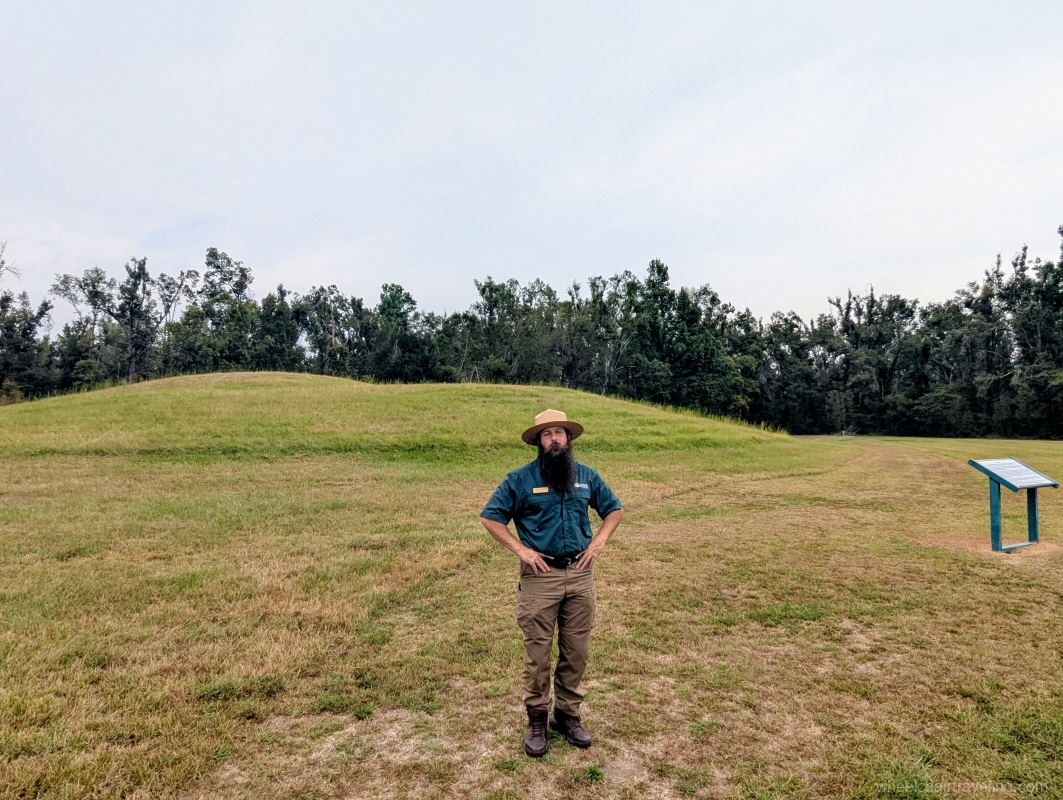
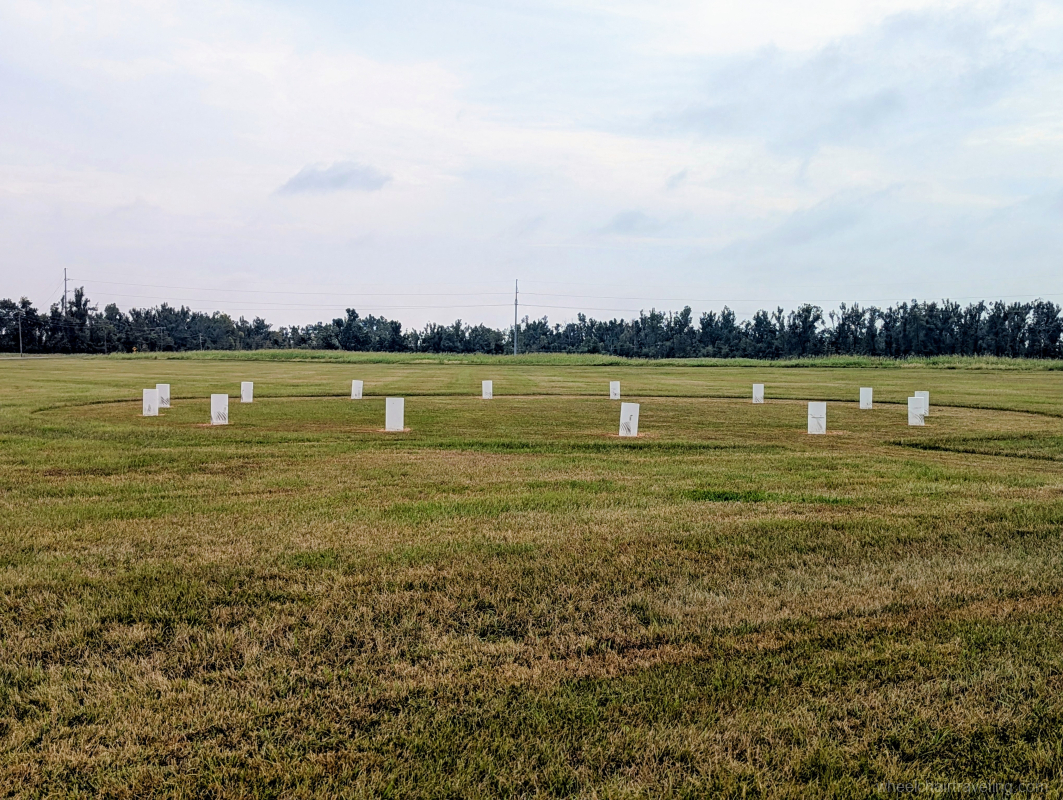
A view of the large mound at Poverty Point framed by flowering trees.
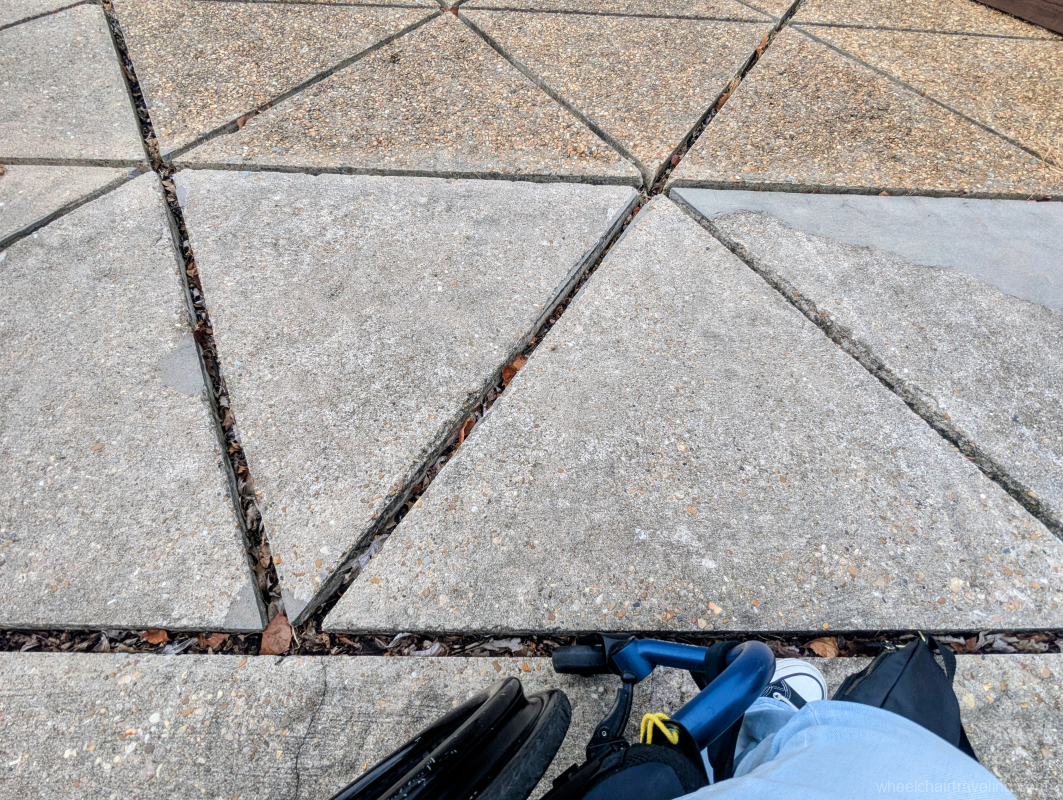
The weak spots are outside. The paving at the info panels by the parking lot and at the mound overlook has wide cracks and gaps, so watch out with small front casters. There are no accessible picnic tables anywhere that I saw. The paved road around the mounds can be driven, walked or rolled, but there are no accessible trails, including to the top of the mounds.
Overall: good for the museum and tram tour; watch the cracked paving at the info panels and overlook, and plan around the picnic areas.
Poverty Point World Heritage Site is at 6859 Hwy. 577, Pioneer, LA 71266, in rural northeast Louisiana. From I-20, take the Delhi exit and head north toward Epps, then follow the brown signs to LA-577. Plan on roughly an hour from Monroe and about 1.5 hours from Vicksburg; there are few services near the site, so fuel up and eat beforehand. (Official site page)
| Item | Details (check the official site for current prices) |
|---|---|
| Hours | Open daily 9 a.m. to 5 p.m.; closed Thanksgiving, Christmas and New Year’s Day |
| General admission | Small per-person entrance fee; discounted for seniors, free for young children |
| Guided tram tour | Separate, higher-priced ticket that also covers general admission; discounted for seniors, free for young children |
| Tram schedule | Wednesday to Sunday at 10:00, 11:30, 1:00 and 3:00, weather permitting |
| Phone | 318-926-5492 or toll-free 888-926-5492 |
Call ahead to confirm the tram is running and to let staff know a wheelchair user is coming, so they can have the ramp ready. Visit Wednesday through Sunday, since the guided tram tour is the best way to see the earthworks. Any day the site is open, whether or not the tram is running, you can also drive your own car or van on the same paved road the tram uses, or walk and roll it. Bring shade and water in warm months: the grounds are wide open with little cover.
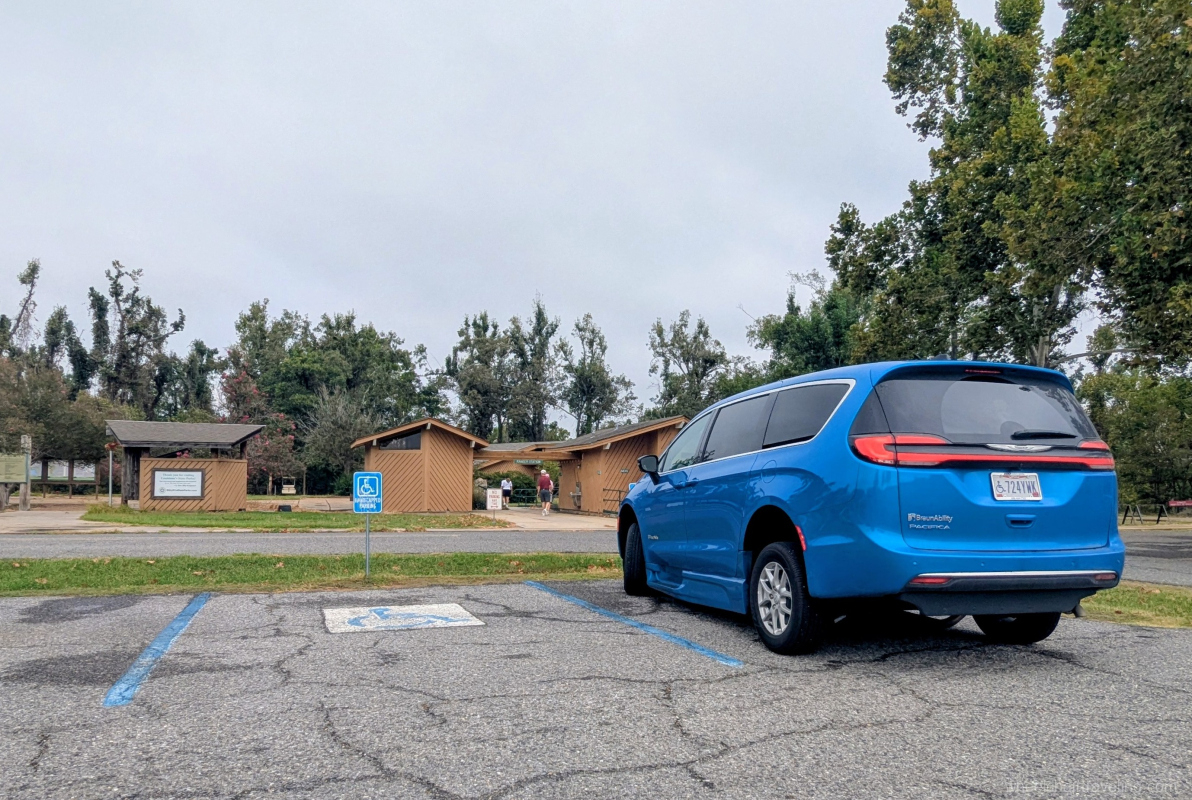
Accessible parking is easy. There is a signed accessible space near the ranger station and restroom building, and the lot is paved and fine for rolling.
Next to the parking lot is a roofed row of info panels introducing the site, including a map of the earthworks. The panels hang low enough to read comfortably from a seated position, and they make a good first stop.
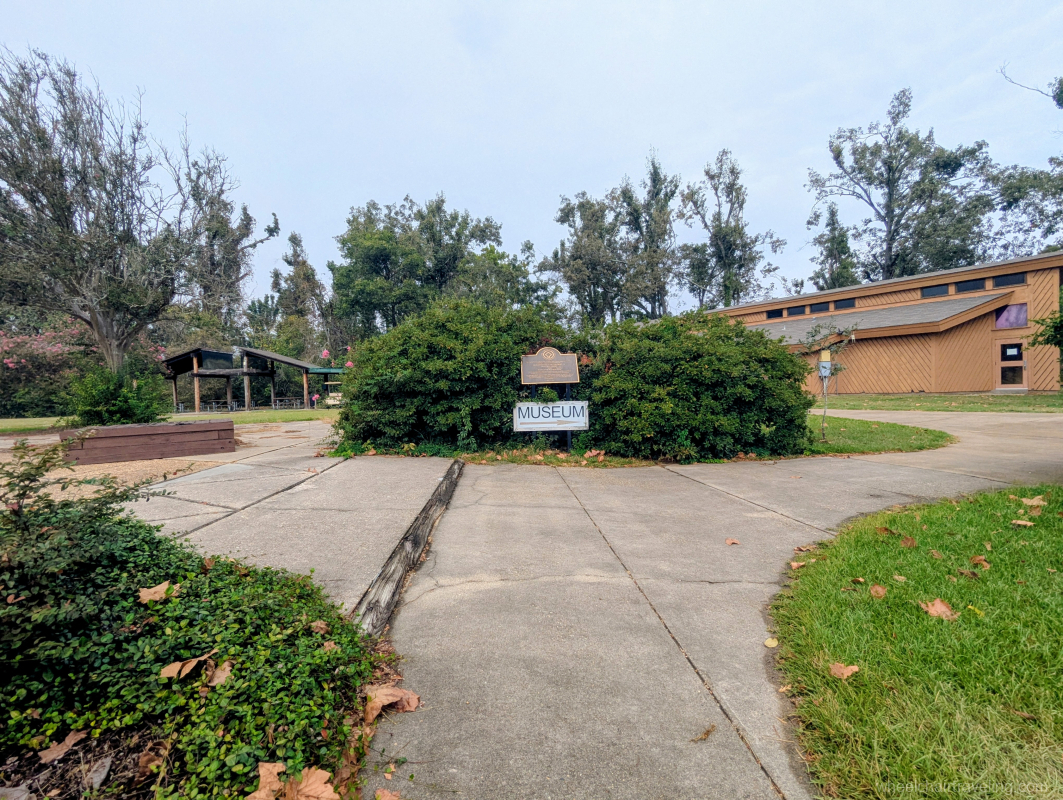
The paving at the info panels is the rough part. It is made of large triangular concrete panels, some smooth and some exposed aggregate, and the joints between them have opened into wide gaps and cracks. Leaves and debris fill the gaps, and a few panel edges sit slightly higher than their neighbors. Small front casters can drop into a gap and stop you short, so cross the joints at an angle and take it slowly.
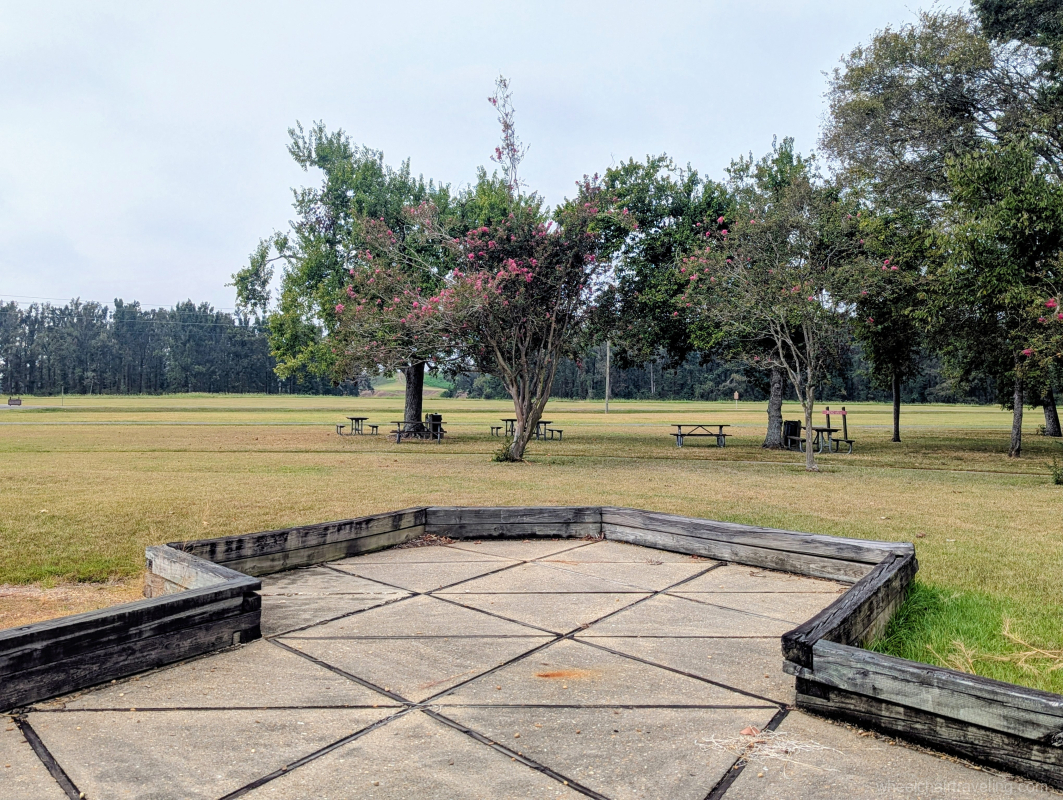
Nearby is an overlook of the mound: a hexagonal concrete platform edged with low timber walls, facing the mound across the field. It is paved the same way, with the same wide gaps and cracks, so take the same care with small casters.
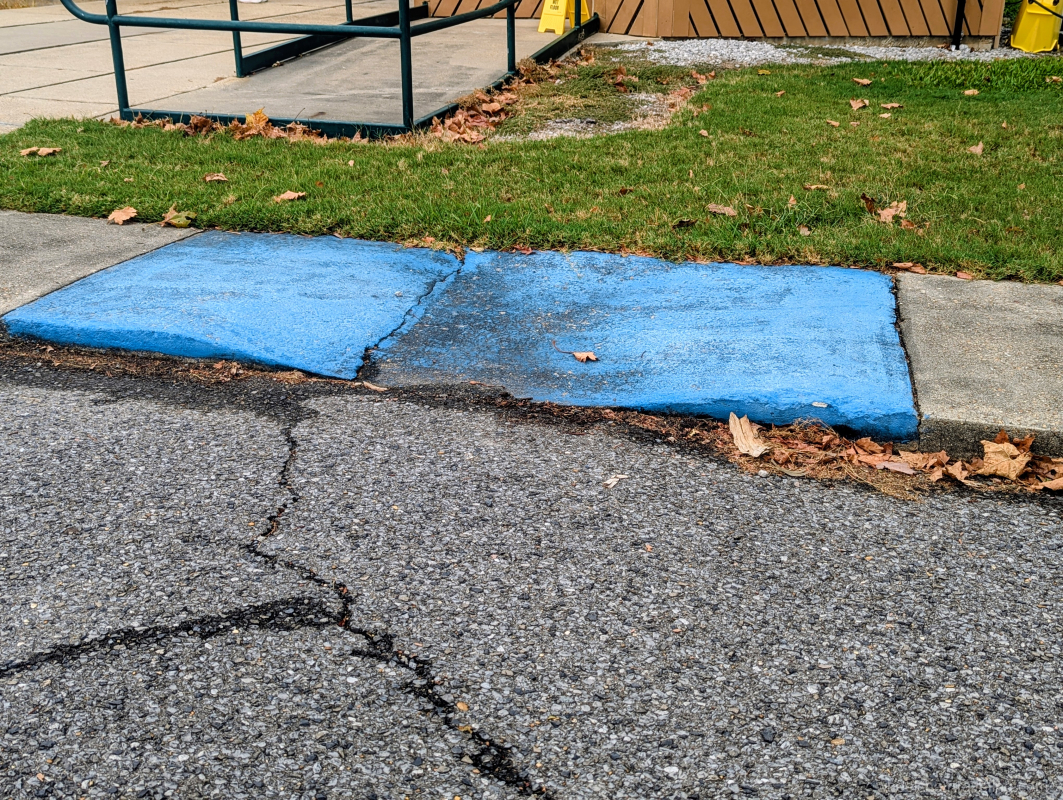
A blue-painted curb ramp leads from the parking lot up onto the sidewalk. The paint is chipping, but the ramp itself is fine.
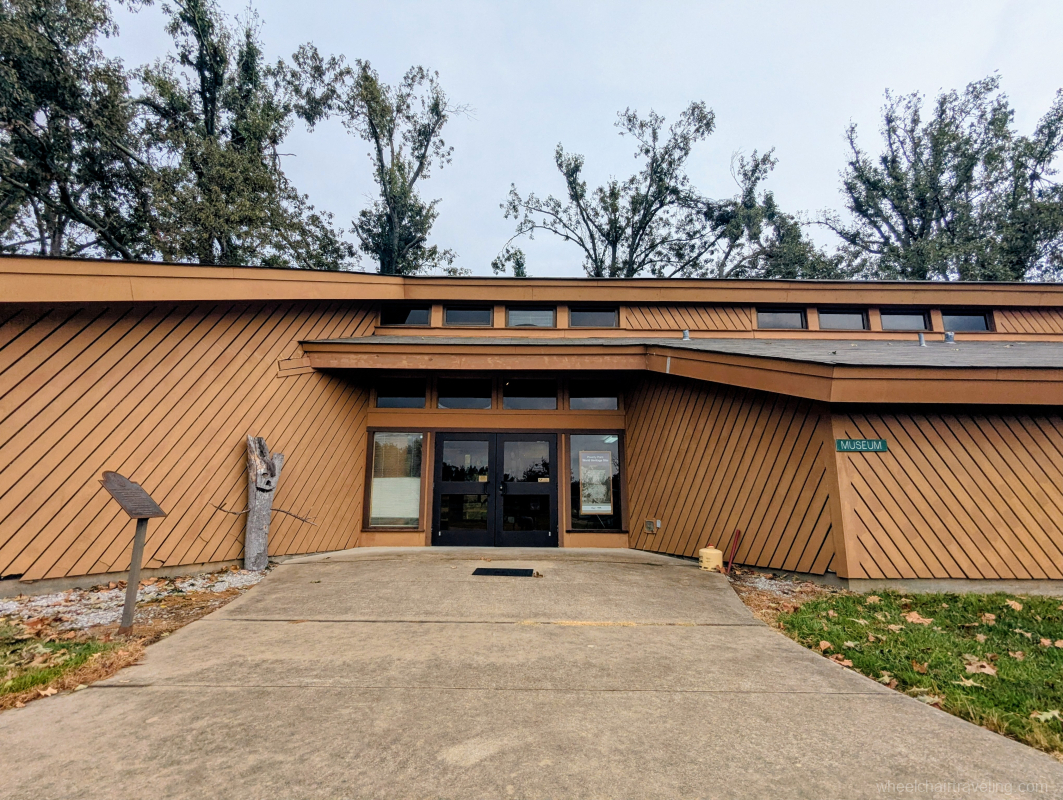
The museum is the most accessible part of the site. A wide, gently sloped concrete walk leads straight to the entrance with no steps. The double glass doors sit at a level threshold with a mat in front. I did not see an automatic door opener, so you may need a hand with the doors.
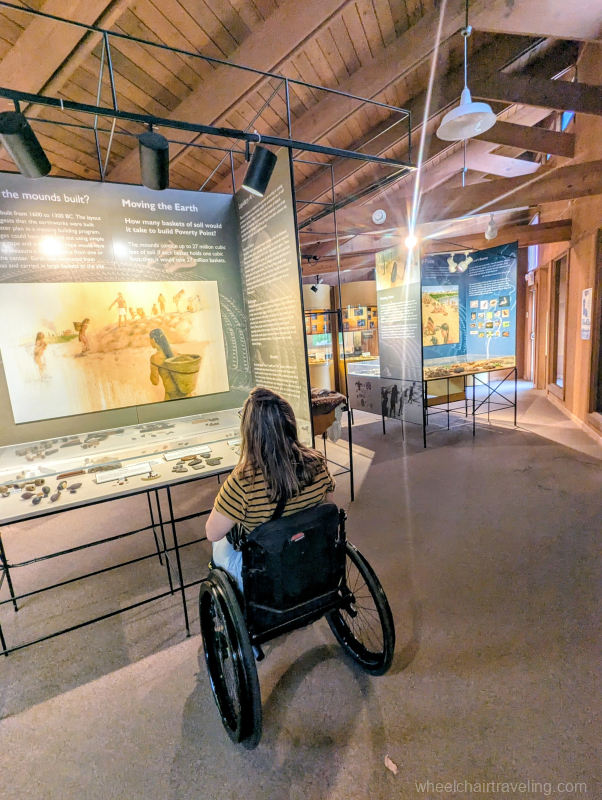
Inside, the floor is low-pile carpet that rolls easily. Aisles between exhibits are wide, with plenty of room to turn and pass other visitors. The glass artifact cases are at table height, so you can see the tools, beads and clay cooking balls from a seated position. Some large wall panels have smaller text set high up, which can mean craning your neck.
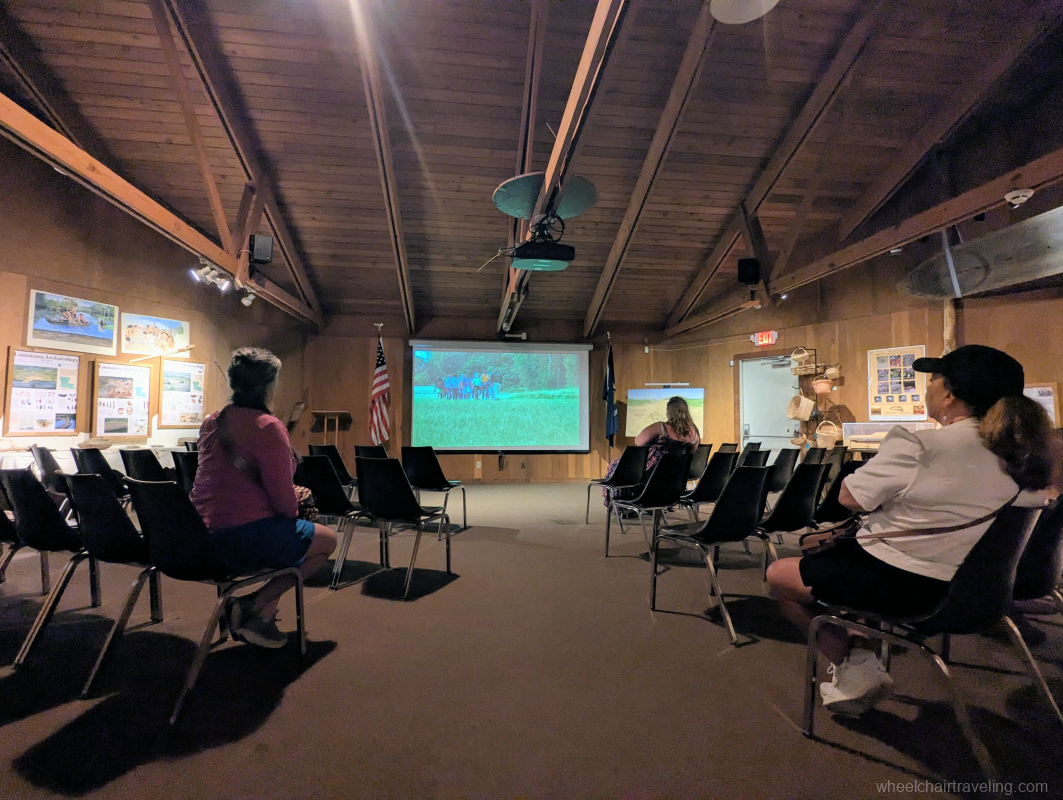
The film theater uses loose, movable chairs on a carpeted floor, not fixed rows. You can roll into any open spot or ask staff to move a chair. The introductory film is a good primer before the tram tour.
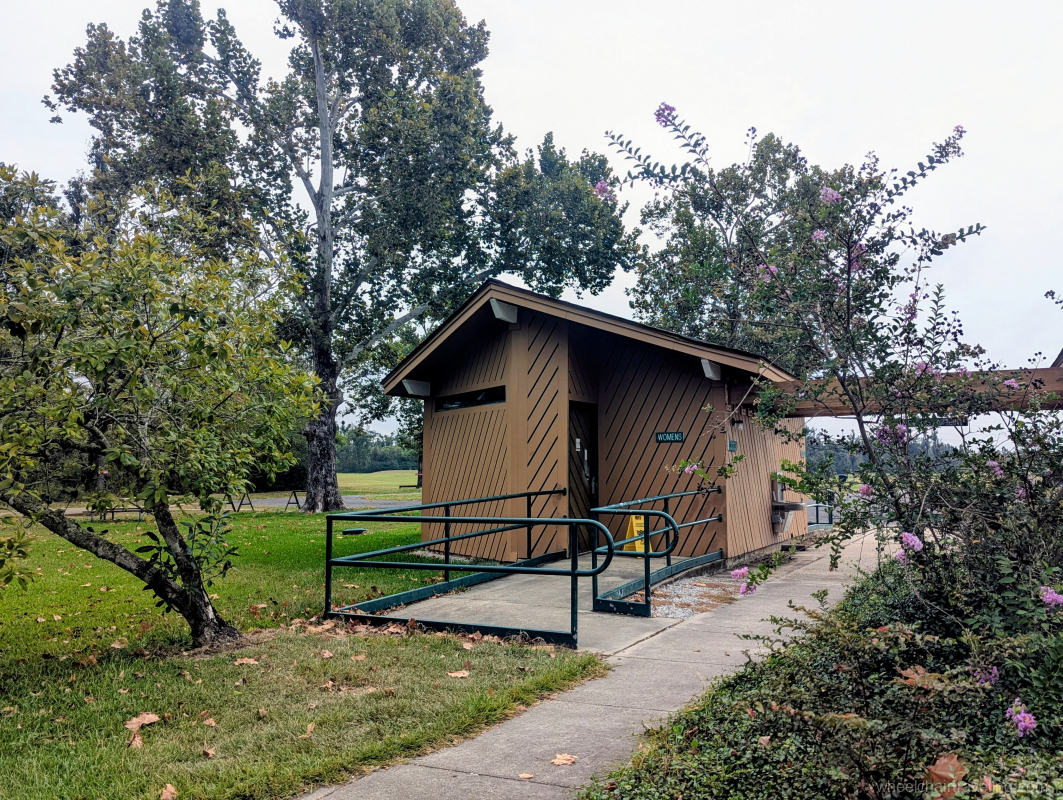
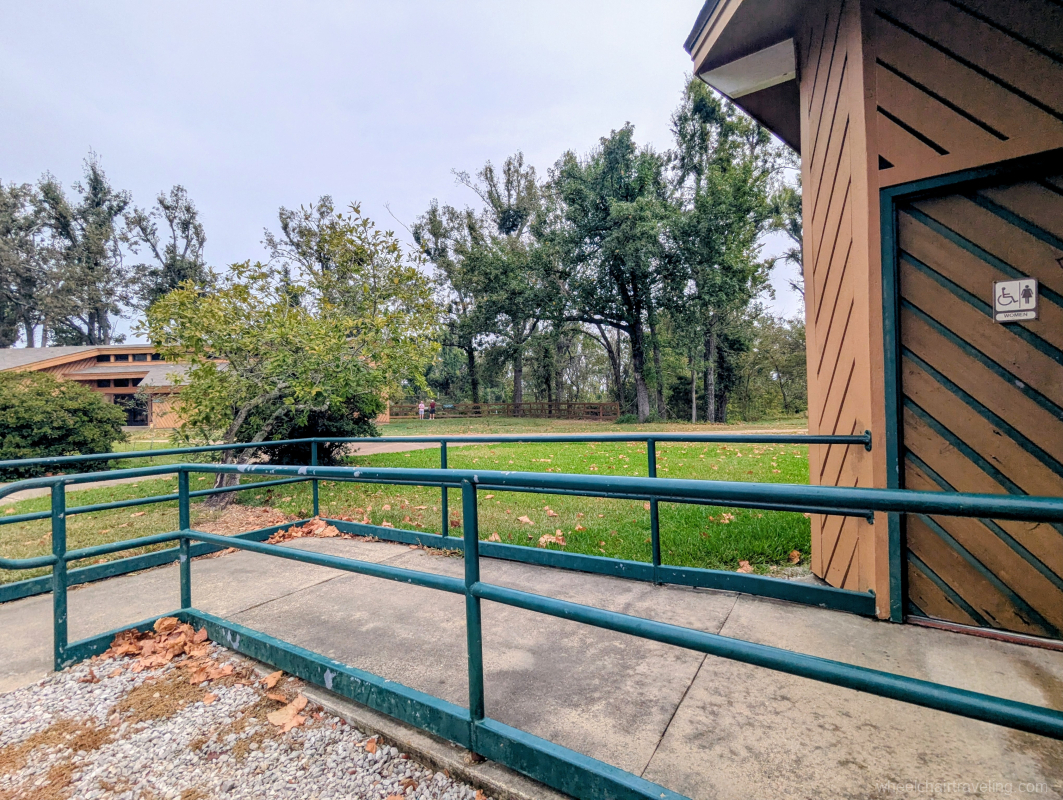
The restrooms are in a separate building near the parking lot, reached by a concrete ramp with green metal handrails on both sides. The ramp is a gentle grade with a switchback and a level landing at the door. Doors carry the wheelchair symbol. A “wet floor” sign was out when we visited, so the tile may be slick after cleaning.
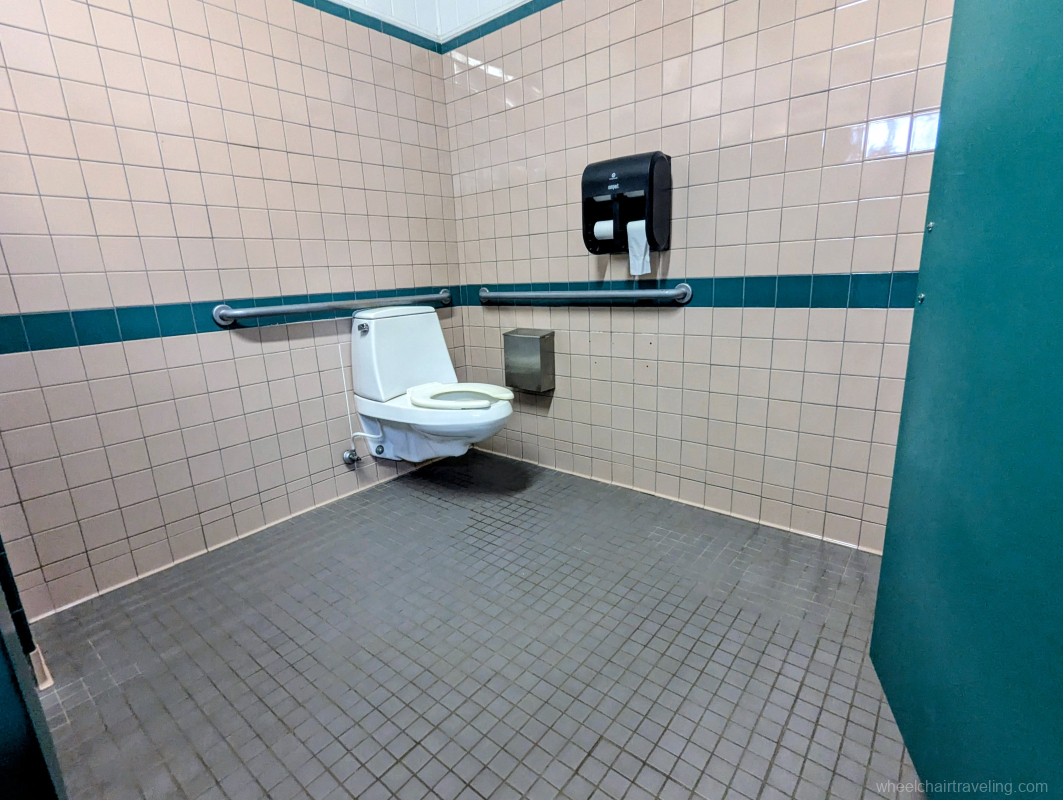
The accessible stall is large, with plenty of room to turn a chair and set up for a side transfer. It has a wall-hung toilet with grab bars on the side and back walls.
The main drawback is the toilet paper dispenser, mounted high above the side grab bar and a long reach from a seated position.
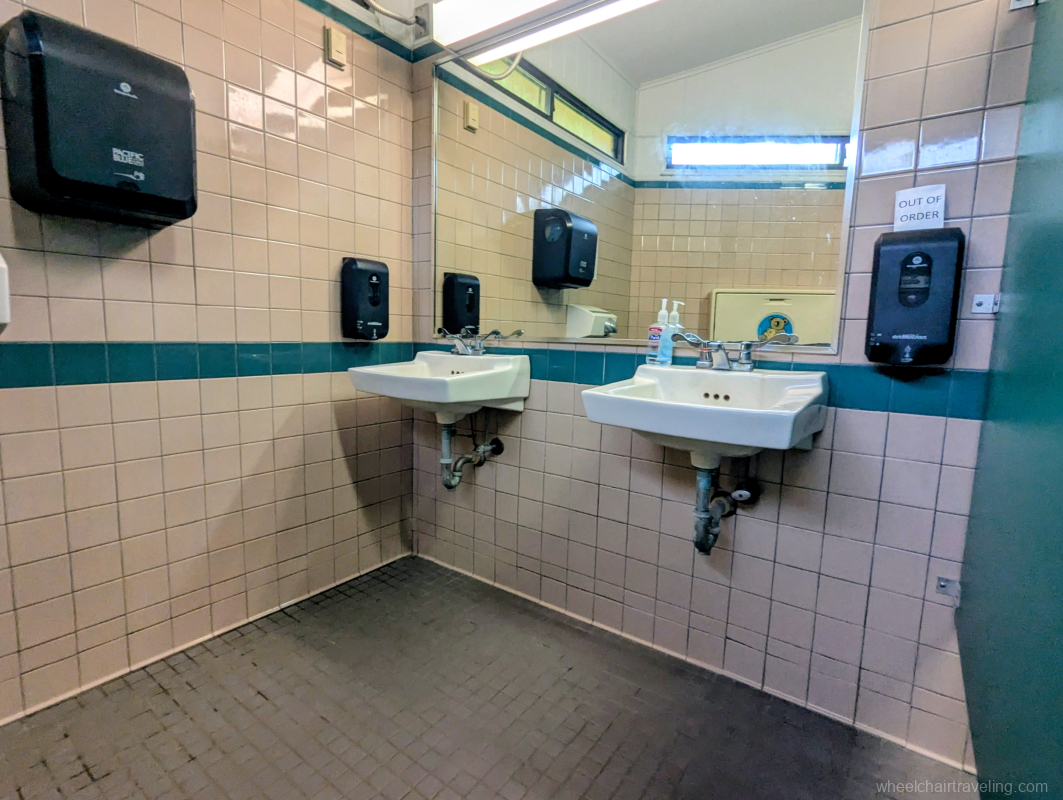
The sinks are wall-mounted with open space underneath and lever handles. However, the drain and supply pipes are bare, not wrapped, so watch your knees on hot water. Soap and towel dispensers are automatic but mounted above the sinks and to the side, a stretch for some users. One soap dispenser was marked out of order on our visit. A baby changing table is in the room.
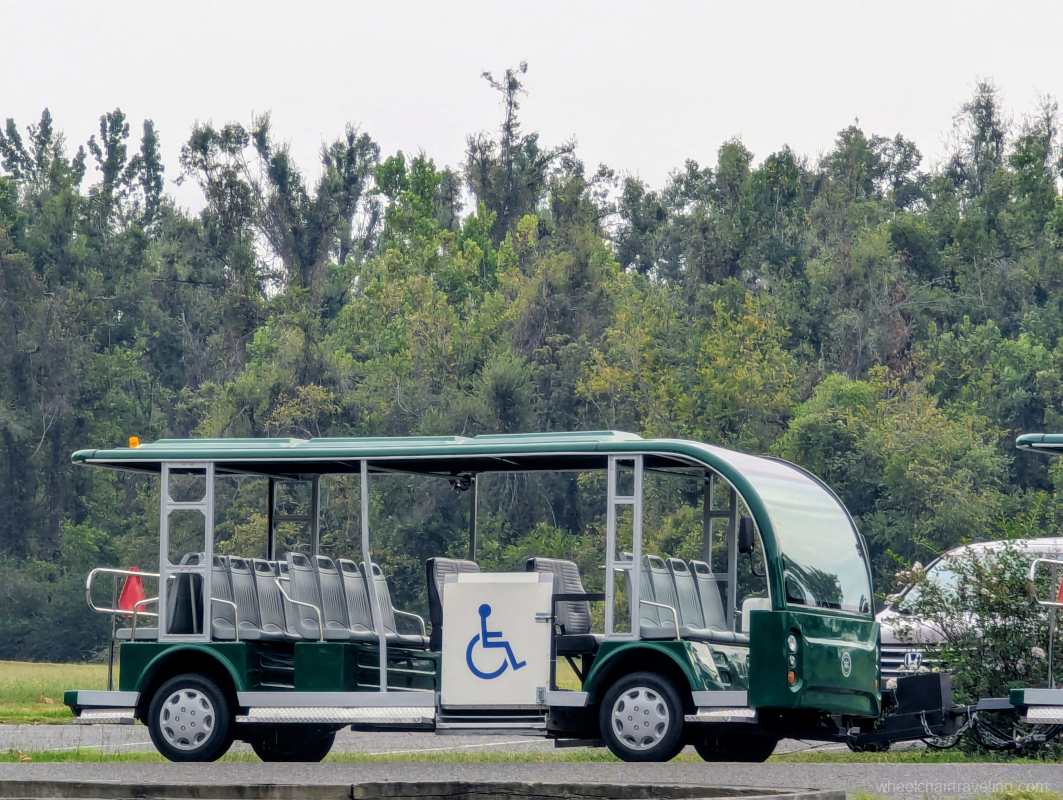
The tram tour is the highlight for wheelchair users and the best accessible way to see the earthworks. The open-air green trams are a lead car towing passenger cars, with a covered roof and open sides. The ranger’s narration is what makes it great: you hear stories and details about the earthworks you would not get driving the same road in your own vehicle.
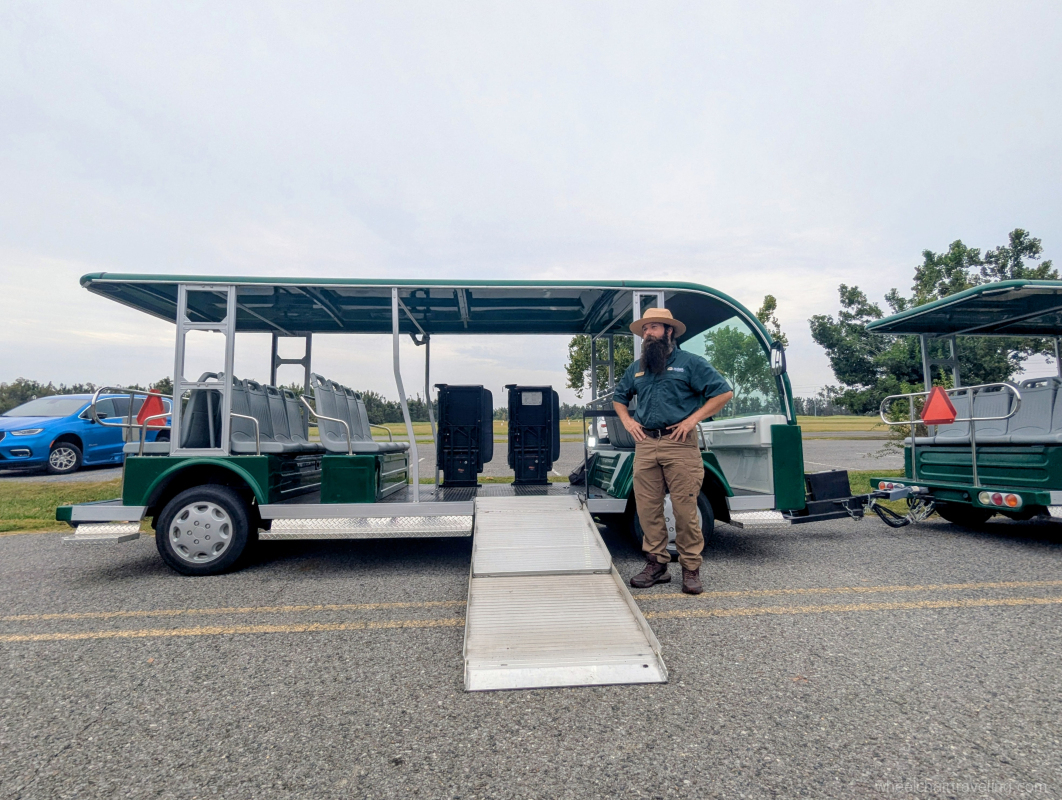
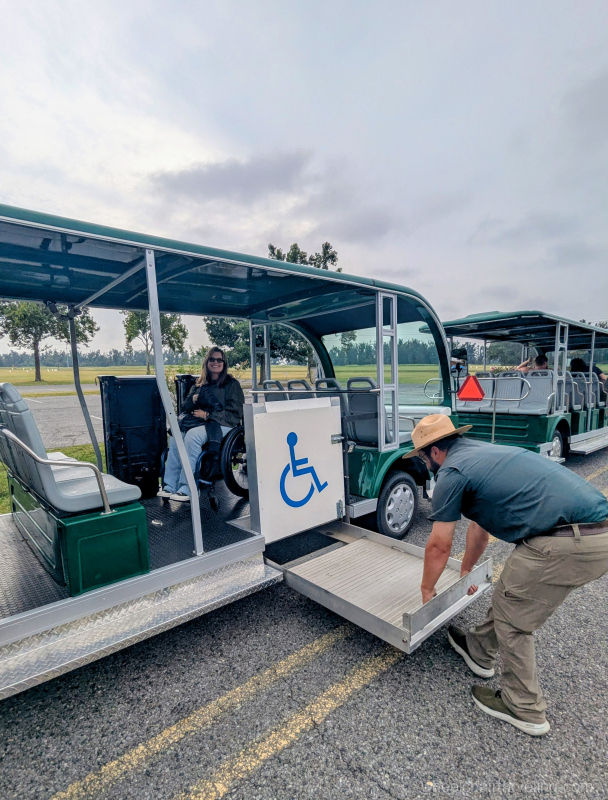
One car has a dedicated wheelchair position marked with the wheelchair symbol. The ranger flips up two seats to clear floor space, opens a side gate and pulls out a two-section aluminum ramp to the pavement. The ramp is long enough for a reasonable slope, and the ranger was happy to help. You ride in your own chair with a clear view out the open side.
For securement, the car carries a Q’Straint tie-down kit stored in a bag by the wheelchair spot. Ask the ranger to use it, since the tram stops and starts along the route.
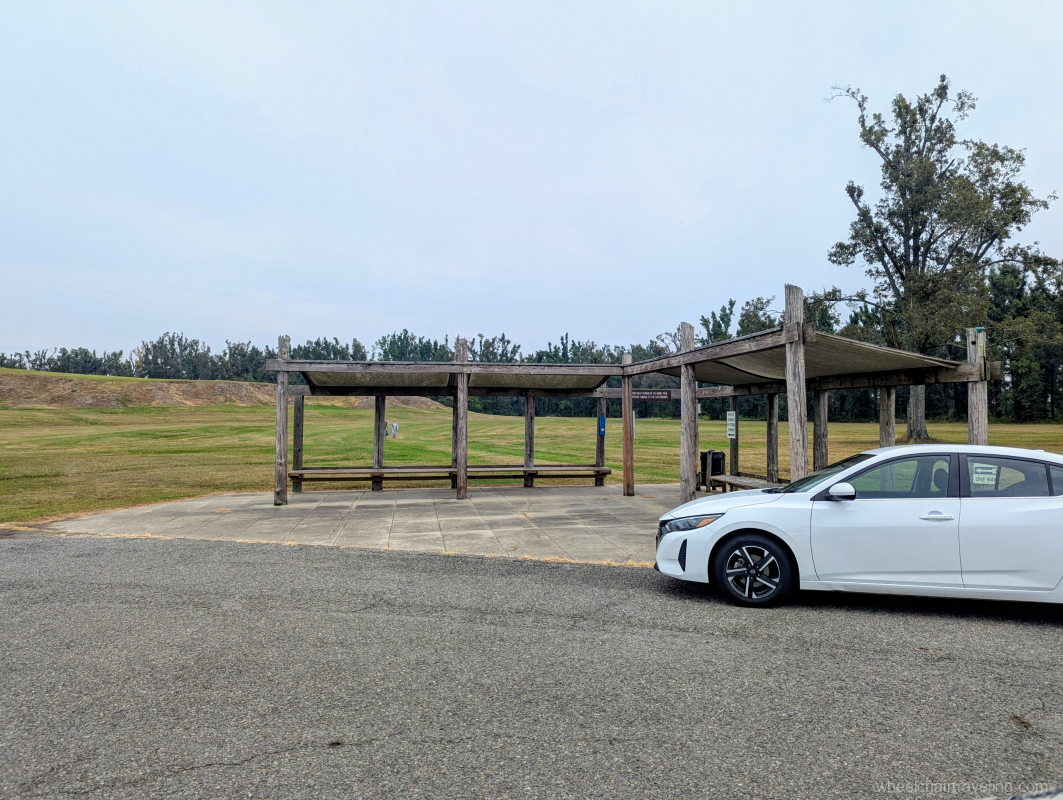
At the stop near the mounds there is a large wooden shade shelter on a concrete pad, nearly level with the road. It has fixed benches and room to roll in under the roof. A sign asks visitors to stay on the trail to protect the earthworks, so the mounds are viewed from here, not climbed.
Paved surfaces connect the parking area, museum, restrooms and picnic shelters, but the earthworks are reached only by grass. Here is what you will roll on:
If you are rolling the tour road, the open ground has little shade, so go early or late in warm weather. The tram tour is still the best choice, since the ranger’s commentary adds so much. Louisiana State Parks lends an all-terrain wheelchair at some parks; call Poverty Point to ask whether one is available here before counting on it.
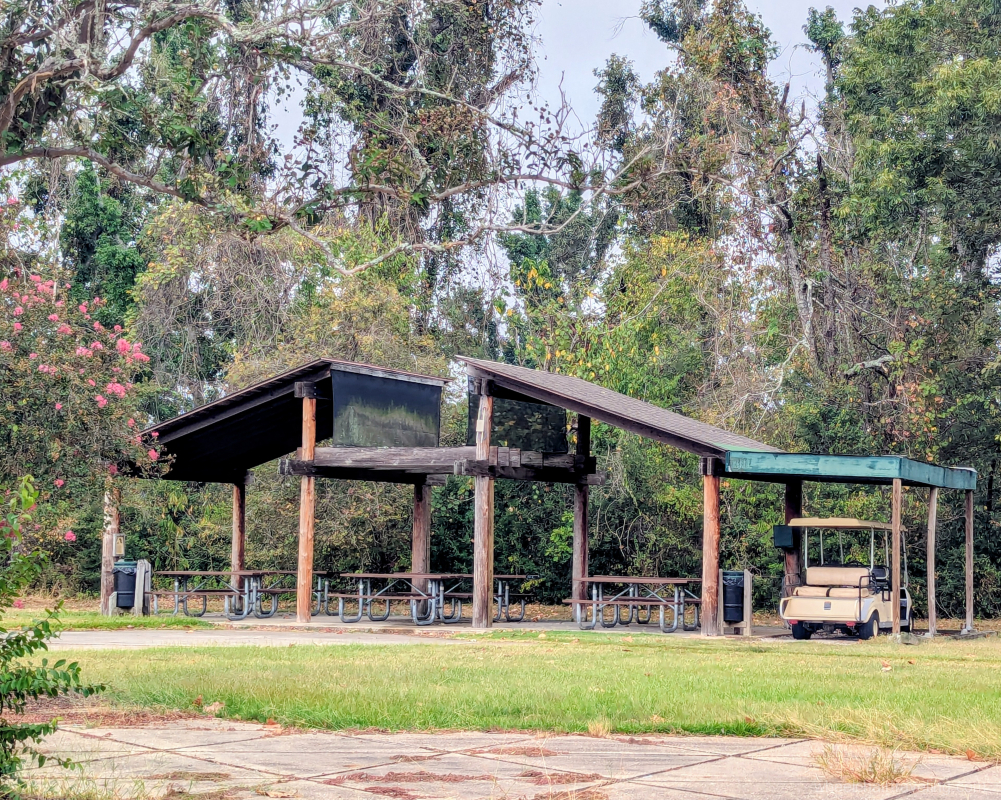
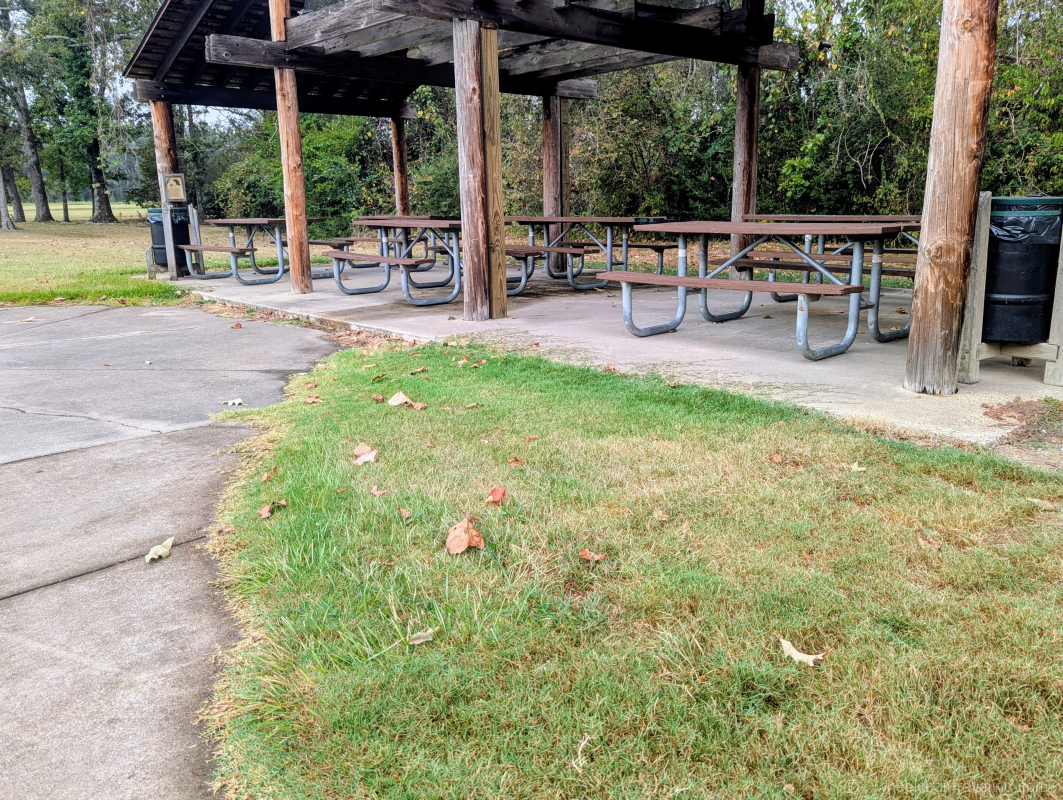
There are no accessible picnic tables at Poverty Point that I found. Every table I saw is a standard metal-frame table with benches attached on both sides and no extended end, so a wheelchair cannot pull in under the top.
The main covered pavilion sits on a concrete pad near the museum and connects to the sidewalk at one corner. The pad edge is close to level with the walk, but grass and debris have crept over the seams. Inside, tables are set close together with wooden posts between them, so maneuvering is tight. A second, larger pavilion nearby has the same standard tables.
Scattered open-air tables under the crape myrtles sit directly on grass with no paved path or pad.
Your best option is to bring a lap tray, or park next to a pavilion table and eat sideways from your chair. Adding even one or two extended-end tables on the pavilion pad would fix this cheaply.
| Feature | Accessible? | Notes |
|---|---|---|
| Tram tour | Yes | Fold-out ramp, flip-up seats, Q’Straint tie-downs; Wed to Sun |
| Museum | Yes | Level entry, carpet, wide aisles, low cases; manual doors |
| Film theater | Yes | Movable chairs, open floor |
| Restroom stall | Mostly | Large stall, grab bars; toilet paper mounted high |
| Restroom sinks | Mostly | Roll-under, lever faucets; pipes not insulated |
| Restroom building | Yes | Railed concrete ramp |
| Shade shelter at the mounds | Yes | Concrete pad near road level, benches |
| Accessible parking | Yes | Signed space; paved lot |
| Curb ramp | Yes | Ramp from parking up to the sidewalk; paint chipping |
| Info panels and mound overlook | Partly | Wide gaps and cracks in the paving, watch small casters; signs readable seated |
| Tour road around the mounds | Yes | Same road as the tram; drive your own vehicle, walk or roll it |
| Hiking trail | No | 2.6 miles of mowed grass; no accessible trails on site |
| Mounds | No | No accessible route, including to the top |
| Picnic tables | No | No extended-end tables anywhere |
| Open-air picnic tables | No | On grass, no path |
Bottom line: go Wednesday to Sunday, call ahead about the tram, do the museum and film first, then ride the tram. Bring your own lunch setup, since the picnic areas will not work from a wheelchair.
Carlos Murillo doesn’t believe disability has to limit adventure, purpose, or possibility, and he’s spending…
Off-road hiking doesn't require owning specialized gear. A growing number of state parks, national parks,…
Hi everyone, my name is Liam Virgo and I’ve been a wheelchair user since childhood…
This interview between Ashley Olson from WheelchairTraveling.com and Martin Heng, a former Lonely Planet employee…
About Insane Wayne Insane Wayne is a comedian and speaker based in California, known for…
This website uses cookies.