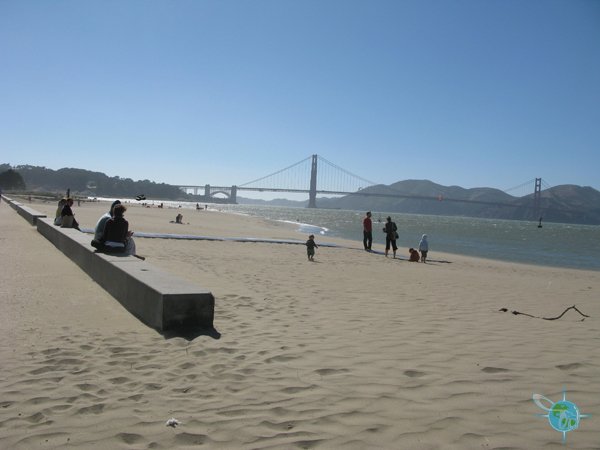
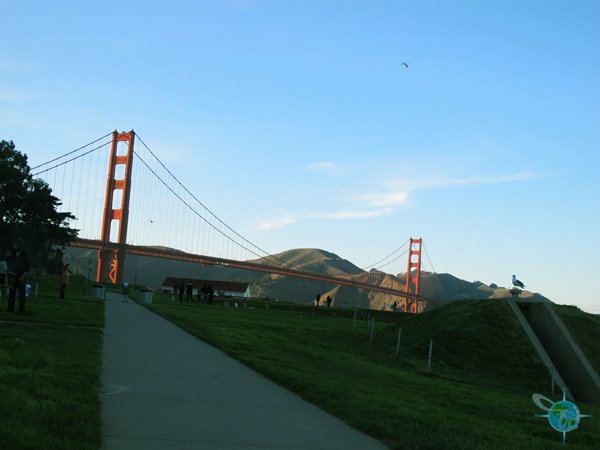
This part of the Presidio was once a coastal wetland, but was filled in for the 1915 Panama-Pacific International Exposition. In 1921 the army constructed Crissy Airfield here, which served as the center for West Coast military aviation until 1936, when Hamilton Field opened in Marin. After the Presidio became part of the Golden Gate Recreation Area, the tidal marsh and lagoon were restored, transforming Crissy Field into a shoreline park.
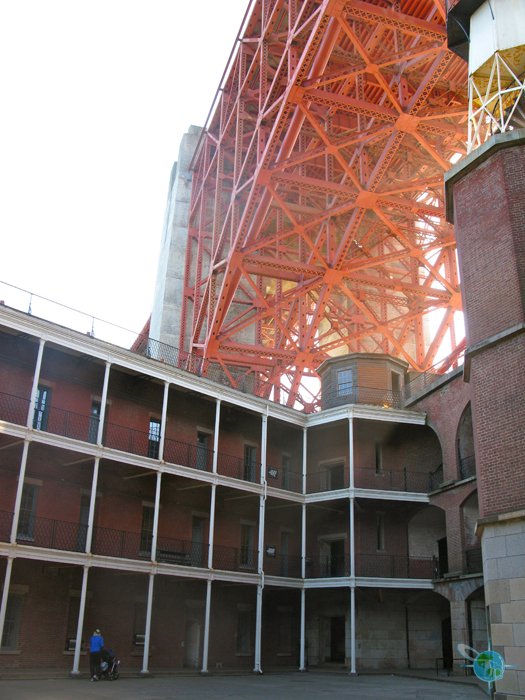
Standing on a promontory near the base of the Golden Gate Bridge, the classic 19th-century Fort Point was built by the U.S. Army Corps of Engineers to protect the harbor, and abandoned five years later when newer rifled cannons made its muzzle-loading cannons obsolete. In the courtyard, which is often extremely windy, cannons and other military equipment are on display. If you look up, you will see the intricate rust-red ironwork on the underside of the Golden Gate Bridge. The sound of cars crossing high above you mingles with the howling wind and the surf crashing against the rocks below.
The ground-floor rooms, which contain historical displays, are accessible via a designated path that winds around the edges of the central courtyard; look for a sign on the left shortly after you enter the fort. The upper floors can only be reached via stairs. Near the visitor center and gift shop is a small auditorium where videos about the fort and the construction of the bridge are shown regularly. The video about the fort gives wheelchair riders a virtual tour of the inaccessible upper floors.
About the Trail
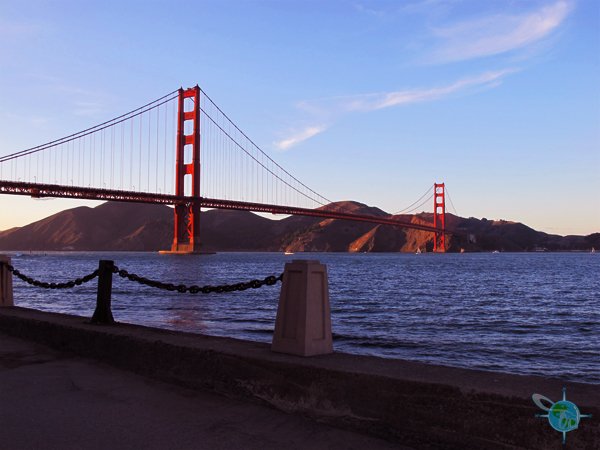
From the East Beach parking lot, the broad, paved trail travels west along the beach. Many wind and kitesurfers launch from East Beach to take advantage of the stiff winds that typically blow through the Gate; stop a moment to watch them skimming the waves, with the bridge towers and sometimes a container ship in the distance. Beach mats allow you to roll right out onto the sand, and a beach wheelchair is available from Fort Mason.
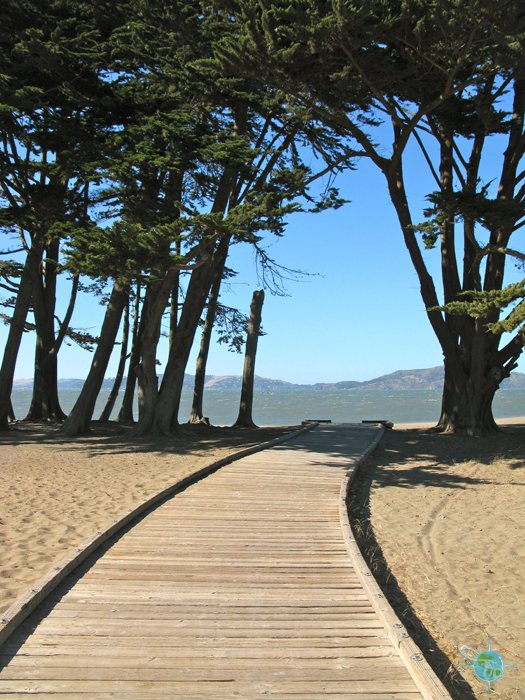
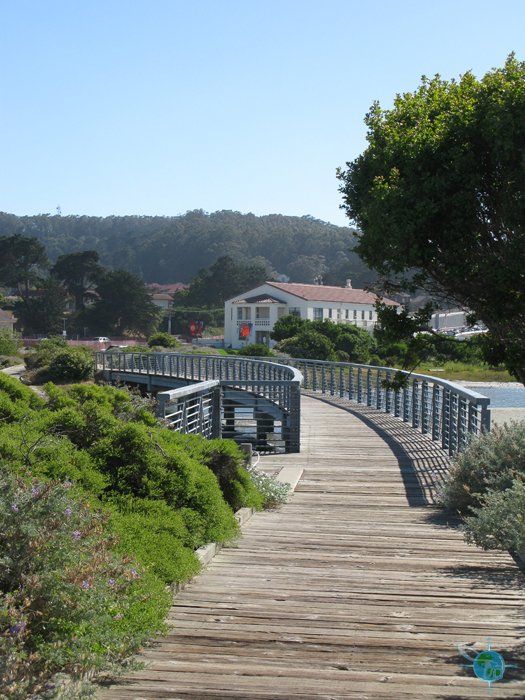
Soon you come to a small trail that leads away from the bay and across the marsh on a wooden boardwalk. This protected wildlife area has easy-to-operate gates at both ends of the boardwalk. A spur trail leads down near the water’s edge. Back on the main trail, you travel along the large lagoon, where I watched a pair of pelicans land and take off during my early-summer visit; depending on the time of year, you may see many types of ducks and shorebirds here. To your right, a number of wooden boardwalks extend toward the beach, with benches and space for several wheelchairs alongside; these gave me the sense of being on the beach without worrying about getting stuck in the sand.
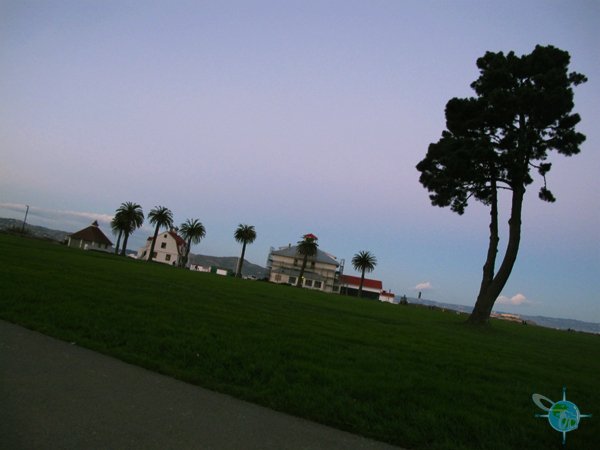
Past the lagoon, a large grassy field marks the site of the former airfield. You soon come to the Gulf of the Farallones National Marine Sanctuary Visitor Center, on your right. Follow the sidewalk to the main entrance, then wrap around the building to reach the ramp. If that entrance is locked, ring the buzzer (54 inches high). The amount of educational information stored in such a small space surprised me, and I especially enjoyed feeling the pelts of some of the marine mammals.
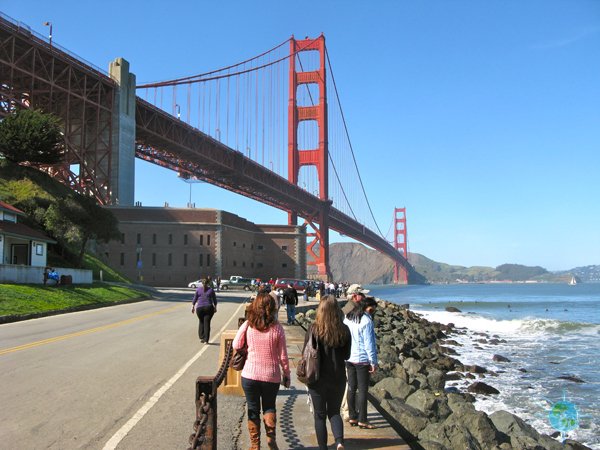
After the visitor center you come to the West Bluffs picnic area, with several picnic tables and barbecue grills on concrete pads. The nearby Warming Hut has a small café and shop. Just west of the hut, you can roll out onto Torpedo Wharf (although the surface is very rough and cracked), built in 1907 and rebuilt for use during World War II. Past the wharf, the trail to Fort Point is less appealing, as it becomes a sidewalk with a cross slope and then continues through a parking lot with no safe path of travel. Fortunately, there are often many pedestrians along this route and cars tend to move slowly. Here you are traveling right at the water’s edge; at high tide and during storms, waves can splash the roadway along this stretch.
As you approach Fort Point, look for surfers and porpoises – when conditions are right, this is a favorite spot for both. After touring the fort, head back along the trail toward your starting point. San Francisco’s skyline rises in the distance; late in the day, you may even see the buildings aglow with reddening light from the setting sun. Crissy Field is also an excellent spot from which to view the rising moon, or to watch as great billows of fog come pouring through the Gate.
The facilities listed below meet all of our access criteria unless otherwise noted.
This interview between Ashley Olson from WheelchairTraveling.com and Martin Heng, a former Lonely Planet employee…
About Insane Wayne Insane Wayne is a comedian and speaker based in California, known for…
Accessible cruising can open the door to a memorable and relaxing vacation, but the details…
For many wheelchair users visiting the United States, renting a wheelchair-accessible van can make the…
Travel has long been recognized as a powerful way to experience the world, learn about…
Disclosure: This article highlights products that may be helpful for wheelchair travelers. WheelchairTraveling.com received a…
This website uses cookies.